


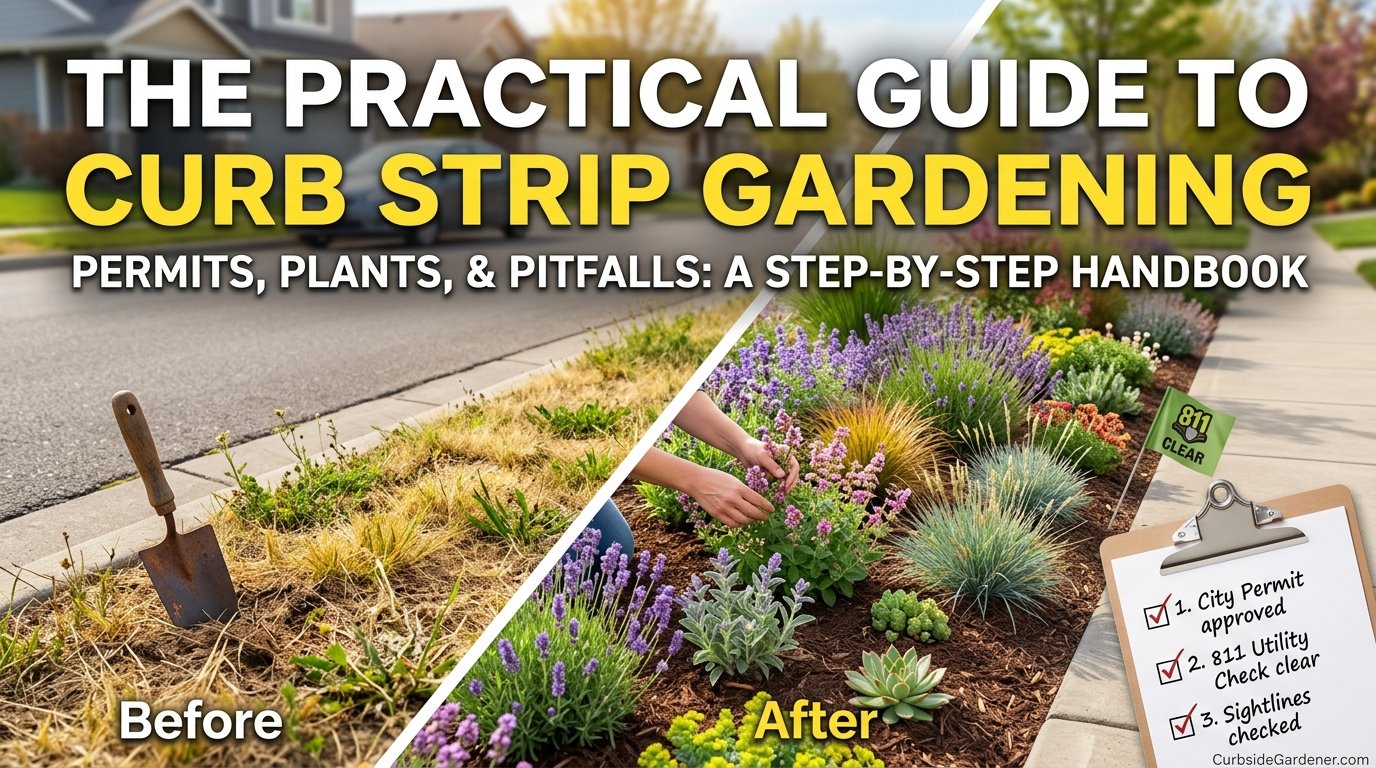
Every spring, I see homeowners standing over their threadbare curb strips, wondering how to replace the city-issued turf with something more useful than a weed patch. A parkway strip garden sounds like the answer, but nobody tells you how many hoops to jump through to stay legal—or how to avoid surprise expenses and city headaches. Here’s the practical, step-by-step guide to curb strip planting that covers permits, plants, and pitfalls (with zero fluff or “look no further” talk—just the stuff I wish neighbors had told me sooner).
- Before you dig: the single permit and safety check that saves headaches
- Keep pedestrians and the city smiling: sightlines, ADA access, and HOA rules that actually matter
- Design that works by climate: native and drought-tolerant picks plus layout tricks
- Build it right: raised beds, rain gardens, setbacks, and irrigation basics
- Budget and time—what to expect (materials, soil work, irrigation, and labor)
- Maintenance, common headaches, and how other people solved them (what to photograph for your before/after story)
Before you dig: the single permit and safety check that saves headaches
Cutting your utility line or having the city rip out your brand-new curb strip garden is a nightmare you can absolutely avoid. Here’s your short checklist, before you so much as sharpen a spade:
- Permit: Check with your city’s public works or transportation department to see if you need a permit for your specific curb strip planting or parkway strip garden. Seattle, for example, requires a free Street Use permit with strict height limits and raised bed rules. Los Angeles lets you plant with no permit if you stick to the Preferred Parkway Planting Materials list. If you’re in Fort Collins, it’s their free Parkway Landscape Amendment. Even where there’s “no permit required,” verify HOA and city codes. The worst surprises happen when you assume you’re invisible.
- 811 Utility Check: Call 811 before digging—seriously, even edging or shoveling can hit gas, electric, or cable lines. Even hand-digging can get you a fine. Call 811
- Sightlines: Confirm your planned plants or raised beds won’t violate city height rules or block views near driveways, crosswalks, or intersections. Most cities (Seattle, Salt Lake, LA) max out at 30–36 inches for mature height, especially within 30 feet of corners or 10 feet of driveways.
Quick printable checklist: (1) City permit in hand; (2) 811 marked and cleared; (3) Measure 10–30 feet for sightlines at all corners/driveways—keep plantings below 30 inches here, 36 for mid-block strips, unless your city is stricter.
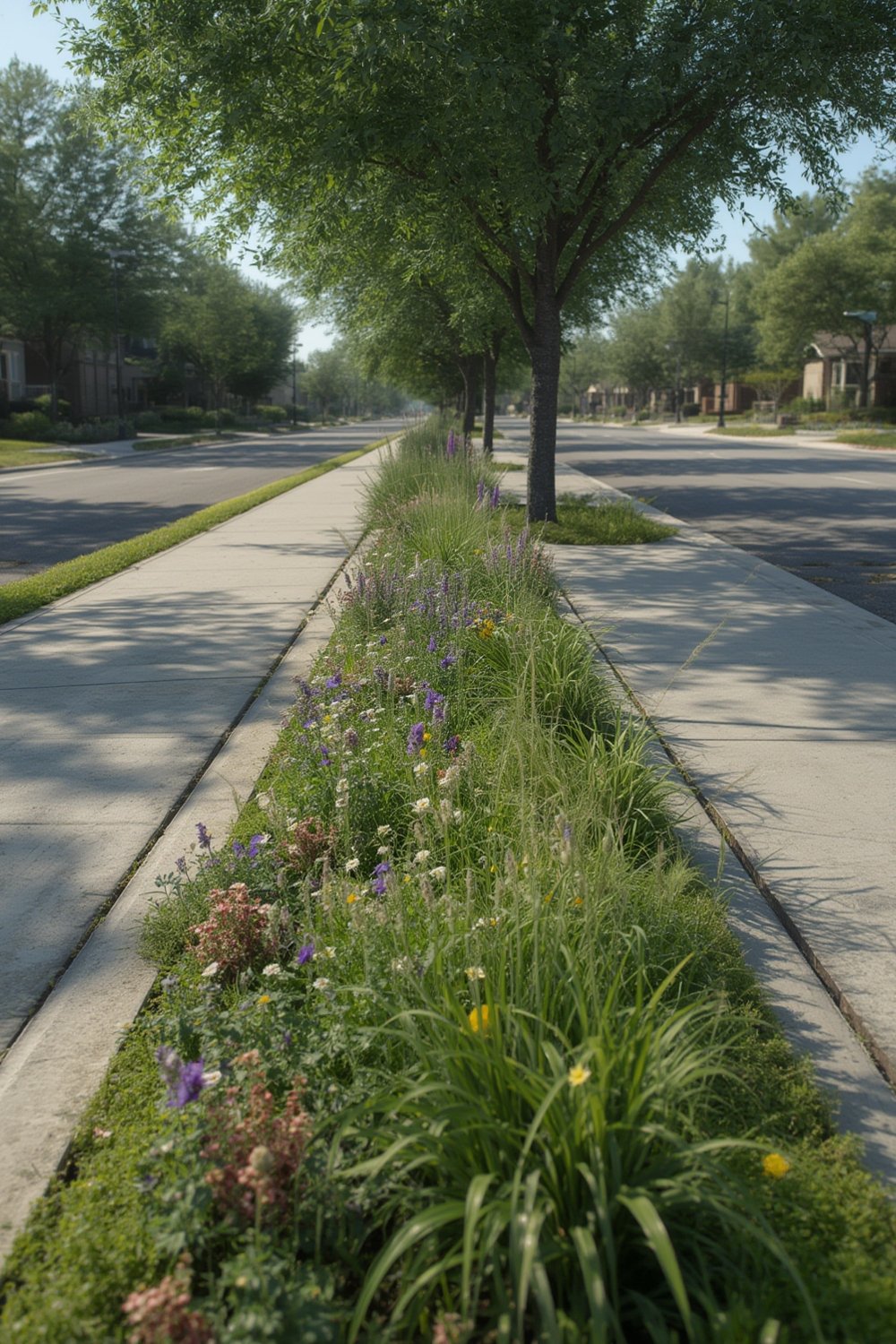
Skip this front-end step and you’re rolling the dice. I’ve seen beautiful curb strip plantings uprooted because a neighbor’s view was blocked or fiber optic crews needed access. Permits in most places are free—what’s not free is redoing everything after a city notice.
Keep pedestrians and the city smiling: sightlines, ADA access, and HOA rules that actually matter
Most headaches come from two places: city safety enforcement and fed-up neighbors reporting you because grandma can’t get through with her walker. Here’s what actually matters:
Height and Visibility: The “No Ambush Corners” Rule
Seattle law says 3 feet max height for mature plants—drop that to 30 inches within 30 feet of intersections or 10 feet from any driveway. Reference Source. Salt Lake County recommends 36 inches overall, same drop near line-of-sight hazards. It’s not just city fussiness: taller plants here cause accidents, get vandalized, or trigger city removal orders.
ADA Access—Walkways and Driveways Stay Clear
Leave at least 2 feet of clear space between any raised beds or dense plantings and the sidewalk/curb. Many cities demand a “landing strip”—18 inches of turf, resilient groundcover (clover, thyme), or mulch/pavers next to the curb so folks can exit parked cars without stomping on plants. This also helps with trash pickup, mail, and deliveries. Raised beds almost always need at least 1 foot from the sidewalk edge and 3 feet from curb to meet code.
HOA/Neighborhood Rules—The Wildcard
Always check your HOA or neighborhood association language before you invest in soil or $20-a-gallon nectar plants. Many have outdated “turf only” or “no edibles” rules, but drought mandates and Texas state law (see: Round Rock) sometimes override. Document every approval—this can be the difference between a $40 mulch order and a $400 headache later.
Skip measuring or ignore walkway clearance and you’ll get notice from the city—or your neighbor with a cane—guaranteed.
Design that works by climate: native and drought-tolerant picks plus layout tricks
Now’s when planning gets fun, but you want plants that survive road salt, car doors, splash-back heat, and summer droughts. What works depends entirely on your region. Think “hell strip native plants”—rugged, local, and low maintenance beats Instagram “one-season wonders.”
Find Your Local “Approved List”
- Seattle: Seattle Green Factor Plant List
- Los Angeles: Preferred Parkway Planting Materials
- Salt Lake County: Use drought-tolerant, no taller than 36 inches.
My Top Picks by Climate (with real success or failures)
- Cool-moist Pacific NW:
- Creeping Oregon grape (Mahonia repens)
- Kinnikinnick (Arctostaphylos uva-ursi)
- Low-growing sedge (Carex spp.)
- Seaside daisy (Erigeron glaucus)
- Penstemon (varieties under 2ft)
- Mediterranean/CA:
- Dwarf yarrow (Achillea millefolium ‘Little Moonshine’)
- Salvia species (check the LA list)
- California fescue (Festuca californica)
- Mounding native buckwheats (Eriogonum spp.)
- Prostrate rosemary (if edible allowed)
- Intermountain West:
- Blue grama grass (Bouteloua gracilis)
- Prairie zinnia (Zinnia grandiflora)
- Rocky Mountain penstemon (Penstemon strictus)
- Blanketflower (Gaillardia aristata)
- Hot-dry South:
- Blackfoot daisy (Melampodium leucanthum)
- Damianita (Chrysactinia mexicana)
- Lantana (mounding, as allowed)
- Purple skullcap (Scutellaria suffrutescens)
- Nolina or beargrass
- Humid East:
- Wild strawberry (Fragaria virginiana)
- Eastern bluestar (Amsonia tabernaemontana)
- Low-growing coneflower (Echinacea tennesseensis)
- Dwarf switchgrass (Panicum virgatum ‘Shenandoah’)
- Woodland phlox
Don’t see your city on the list? Search for “native groundcover” and “pollinator shrub” plus your state. If you pick showy annuals only, you’ll have a dead curb strip by July and a HOA letter by fall. Stick to low-growing perennials and grasses—90% of your job is done if you check the mature size before planting.
Pattern tip: Most successful parking strip gardens keep the whole bed low (under 3 feet), with the tallest clumps dead-center and a “landing” mulch or step-able plant border along curb and sidewalk. It keeps codes happy and repairs simple.
Build it right: raised beds, rain gardens, setbacks, and irrigation basics
Once you’ve got the plants picked, your real choices look like this:
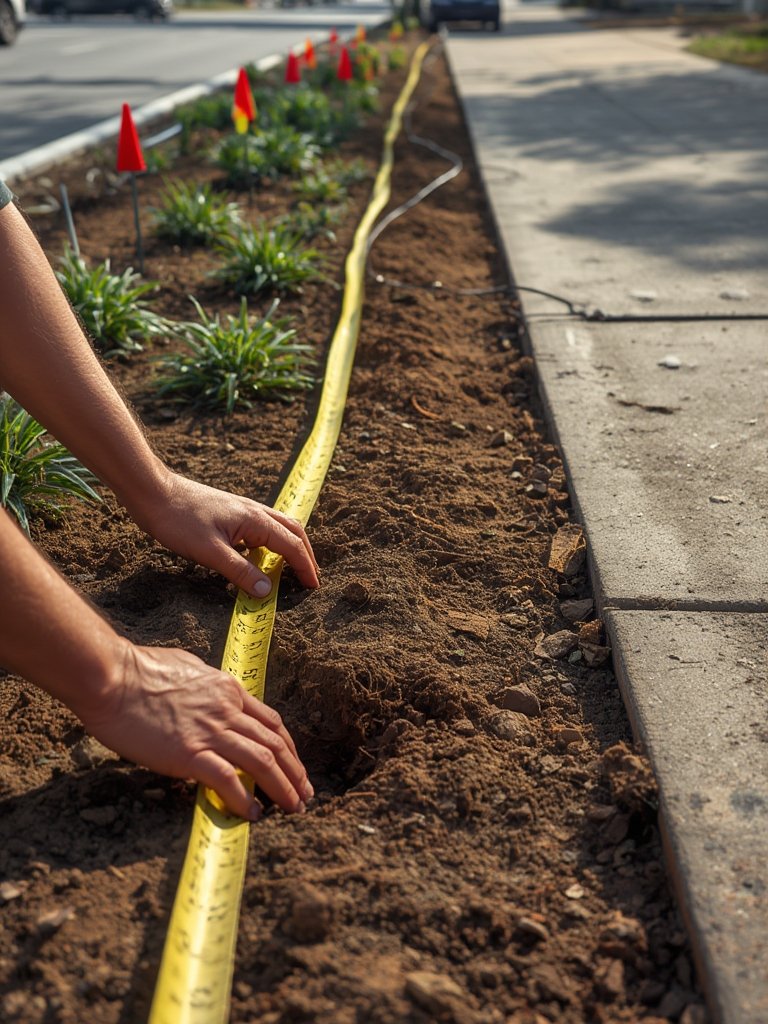
Option 1: Rain Garden/Bioretention—Eco, Legal, a Little Extra Labor
If your city encourages rain gardens (Seattle does!), you can turn your parkway strip garden into a stormwater sponge using a shallow basin filled with sand/compost mix and deep-rooted regionals. These work best in wider strips (5 feet+), require at least 18–24 inches of loosened soil, and function as “green infrastructure.” Seattle details setback rules: no basins or raised beds within 1 foot of sidewalk, 3 feet of curb, max height 18 inches for beds, and a continuous “landing strip” for access. Rain gardens are best if you have periodic flooding, persistent puddles, or want city brownie points. Downsides: initial digging is a chore in heavy clay, and you have to commit to maintaining it so mosquitos and weeds don’t take over.
Option 2: Low Raised Bed + Drip + Mulch—Less Mess, Great for Small Strips
If your strip is too narrow or you want the simplest utility strip landscape, a low framed bed or just amended soil, covered with mulch and a drip line on a timer, is the way to go. A 2×12 cedar board cut to length, staked at corners, will last a decade. Fill raised beds with a mix: 50% city-compost, 30% topsoil, 20% perlite/pumice for drainage—overkill, but I’ll never do 100% topsoil for a parking strip garden again after three years of compaction and runoff. Pros: fewer surprise weeds, kids’ soccer balls won’t destroy your perennials, and if you use roll-on weed fabric under mulch, you get at least two seasons before you have to replenish. Cons: still have to keep beds under 18 inches high and away from city infrastructure per the rules above.
Irrigation—Do You Need It?
If you don’t already have a stub for city water (rare), you’re installing a soaker hose or drip line and teeing into a nearby hose bib. For DIY: I use a $25 battery timer, ‘zero pressure’ drip line for annuals, and a simple on-off valve for each strip. Pro systems cost more ($200–$600) but are nearly hands-off. In hot, arid zones or soils over 60% sand, don’t skip drip—watering by hand is an outright lie sold by gardening shows unless you’re home every evening in July. Smart irrigation controllers save another 20–30% on water, but aren’t mandatory for small beds.
Placement and Spacing Checklist
- Never plant closer than 18 inches to the trunk of any city tree—roots don’t forgive compacted changes.
- Leave clear “step-outs” at midpoints and street parking.
- No pea gravel or loose stone without permit—Seattle and LA list these as tripping hazards in public right-of-way.
Want more on low-water beds and why the $12 bagged mulch outperforms triple-priced “designer” mulch? See Drought Tolerant Landscaping: 7 Amazing Ways to Save Water and Cardboard Mulch Garden: 7 Amazing Ways to Build Healthier Soil for the dirt on materials that work in small, exposed strips.
Budget and time—what to expect (materials, soil work, irrigation, and labor)
What does it really cost to convert that brown city strip into a legitimate parking strip garden? Here’s what I see (Seattle/Portland/Salt Lake prices)—adjust for your region but don’t expect miracles:
- Permitting: $0 in most Western US cities if you use approved plants and basic mulch/soil. Seattle and Fort Collins are both free. Fees only show up if you add hardscape, non-approved trees, or special drainage.
- Materials:
- Soil/compost: $30–$75 for enough to build up 3″ over a 4×18′ strip. Don’t be cheap here. If your site is mostly outwash gravel or city backfill, buy a few bags of coarse compost—it saves you a lot of plant failures.
- Mulch: $12–$35, depending if you get free city mulch or pay for fine bark.
- Drip kit: $45–$85 for a starter pack (battery timer, hose tee, 25–50 ft tubing). You’ll rarely need more—just don’t buy the janky “five-pattern sprinkler” at the box store.
- Plants: $70–$225/full strip. Going all seed can shave $30, but almost no hell strip native plants come up predictably from seed in neglected city sidewalk soil.
- Labor:
- DIY: One weekend for demo/soil, half a day for planting, half for irrigation and mulch. Two competent adults can finish an average strip in 8-10 hours, but take it from me—demo and grading are the worst part. Pay for a teenager’s help if you can.
- Pro install: $500–$1800. I’d only pay at the high end if you’re adding rain garden grading, French drains, or complex borders—otherwise most of the job is grunt work with ordinary tools.
Total outlay for a 4×18′ strip: $160–$400, leaning lower if you use city mulch and beg neighbor’s divided perennials. Irrigation and compost are the only places I’d never skimp—proven by two failed plant beds over a clay pan in my case. For other jobs, see Lawn To Meadow Conversion: 7 Amazing Ways to Boost Biodiversity for broader cost breakdowns and a candid rundown of what really moves the budget dial.
Maintenance, common headaches, and how other people solved them (what to photograph for your before/after story)
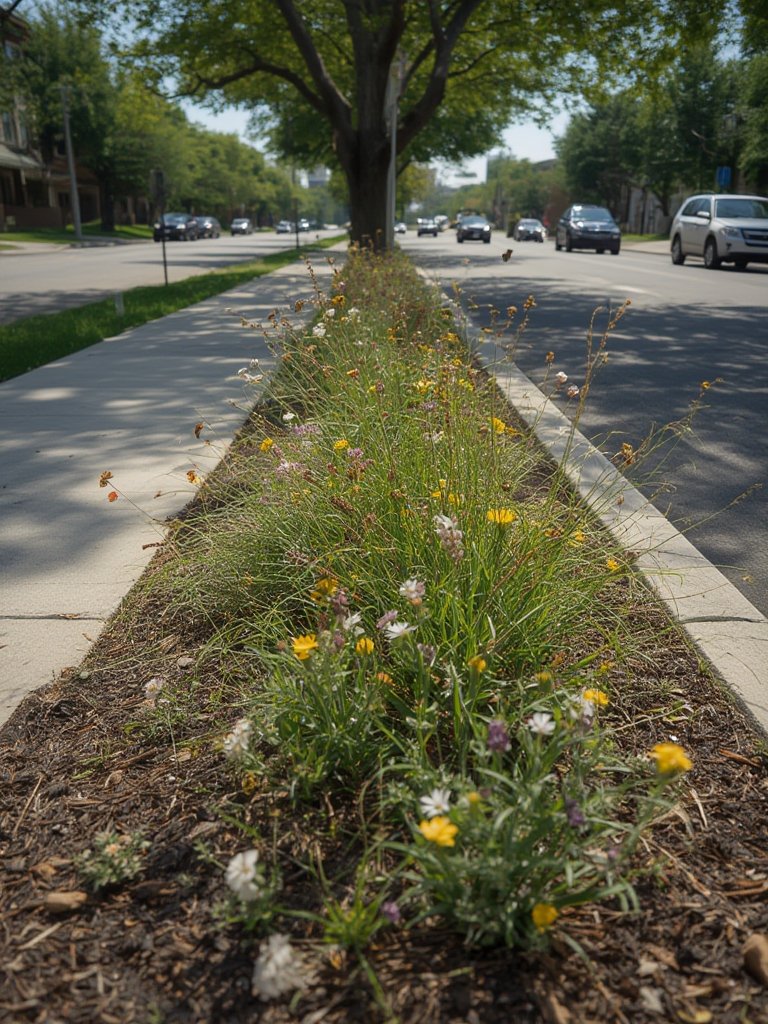
No point sugarcoating it—keeping a city strip looking good is a bit like brushing your teeth: ignore it for a month and things get ugly. But most complaints have easy, low-cost fixes if you plan ahead.
Common Maintenance Headaches
- City interference: If your parkway strip garden flops over the sidewalk or exceeds the 30–36 inch height rule, you’ll get a notice fast. Keep pruners handy—never let rain flop your tallest plants into walkways.
- Weeds: In the first summer, weeds LOVE disturbed soil. Mulch thickly (2+ inches, not less), and spend five minutes biweekly pulling the big ones before they go to seed. It drops off steeply in year two if you’re consistent.
- Vandalism: It happens, especially to high-value herbs, food plants, or in high-traffic areas. Opt for bushy, dense plants rather than “showy singles” and, if possible, trade edibles further from the street.
- Soil compaction and dog damage: If you don’t leave a “landing strip” or mulch pathway, you’ll get dead plants and muddy holes. Keep the heaviest-traffic areas covered in tough groundcover like creeping thyme or mulch you can replenish yearly.
- Water issues: If you skip irrigation or plant what labels say is “drought-tolerant” without acclimating plants the first year, expect a crispy August. Water regularly for the first season; after that, the established roots will handle most dry spells—just like any successful native pollinator planting.
Documentation: The Before-and-After Power Move
Cities and HOAs love documentation, and the “before-and-after” photo sequence can become your best friend if permits or neighbors challenge you. Here’s what to photograph:
- Clear site photo before you start: shows existing grass/weed state and measurements.
- Permits and 811 flags/marks visible.
- In-progress: demo, soil, irrigation “just laid”, first planting.
- After: plants in, mulch down, curb and sidewalk clearly passable.
- One midseason and one after one year (shows that your curb strip planting truly is low-maintenance—not just a temporarily tidy chaos garden).
Real Example: Seattle Parkway Strip Overhaul
Homeowner: Jenny Moore (Greenwood, Seattle, WA)
Timeline: Permit/utility calls on May 1, sod out by May 7, soil/compost/mulch spread that same weekend, planted on May 14, drip installed on May 15. Photos at each step submitted to city for compliance in June. One HOA inquiry—photos and permit record closed the issue. “First summer we watered twice weekly, now it’s a 3x per season tidy/prune and 10 minutes weeding each month. Pollinator traffic’s gone through the roof.” Reference: Seattle planting permits/rules.
Quick Checklist: What to Do If the City Asks for Changes
- Reply with permit copy and before/after photos as documentation.
- Trim, prune, or remove violating plants—do not argue over 4 inches of growth, just cut back and document.
- Contact info for your city’s right-of-way inspector: look up online or use permit documentation. Most want to see action within 10–15 days.
The best defense is always tidy, code-compliant edges and good photo evidence. Once you’ve had one complaint, cities tend to leave you alone after you show that you know the actual rules. If you want to document your curb strip planting’s wild success in style, study photo formats in Chaos Gardening Tutorial: 7 Amazing Ways to Grow a Wild, Biodiverse Patch—your “after” shot might convert your whole block to the low-water revolution.
Done right, a parkway strip garden shrugs off most problems, impresses the neighbors, and even bumps your property value (see Meadowscaping Front Yard: 7 Amazing Ways to Transform Curb Appeal for proof).
Most homeowners just want a practical template—something the city and neighbors approve, pollinators love, and your knees (and wallet) can live with for years. A legal, well-built parkway strip garden is an easy win once you tackle permits, pick the right climate-adapted plants, and keep sightlines and access clear. You’ll skip sickly turf, enjoy more wildlife, and never worry about “illegal landscaping” again. And—bonus—you’ll finally put that thin slice of your lot to real work, not just city-mandated mowing.
Do I really need a permit to remove my curb grass and plant a garden in the strip?
In most cities, yes—even if it’s “free” and takes five minutes online. Seattle, Los Angeles (if you want trees or hardscape), Fort Collins, and many others require you to submit a free application, diagram your strip, and stick to approved plants or design limits. Skipping this step is risky: the city can force you to remove your new garden or fine you for noncompliance. Always double-check your city’s exact requirements before you start digging.
How can I keep my parkway strip garden low maintenance?
The key is picking resilient, well-matched plants for your climate, mulching heavily (2+ inches deep), and running a simple drip line or soaker hose on a timer—especially the first year. Edges should be clear of high-traffic areas (for foot traffic and car doors) with low groundcover near curbs. Plan on a quick prune each season and five-minute walk-throughs every few weeks for weeds. After the first year, most drought-tolerant perennials and grasses need little more than a midsummer drink and fall cutback.
What if my neighbor or HOA complains about my curb strip planting?
Document everything: permits, plant list, before/after photos. Communicate in writing with your neighbor or HOA if possible—share your plant choices, explain code compliance, and, if needed, describe the benefits to pollinators and property values. If your project breaks a stated rule, offer a compromise (such as swapping out a problematic plant or trimming to allowed heights). Most disputes resolve with solid documentation and a neighborly attitude.
What’s the fastest way to improve my strip’s soil for new planting?
Sheet-mulch with cardboard (no tape/labels) topped with 4-6 inches of compost and mulch, then let it break down for 2–4 weeks before planting. This method smothers old grass, feeds earthworms, and sets up new plants for success—see No Dig Gardening: 7 Amazing Ways to Boost Yields for full details. For compacted or clay soil, fork in some coarse sand or gravel to aid drainage before planting.