

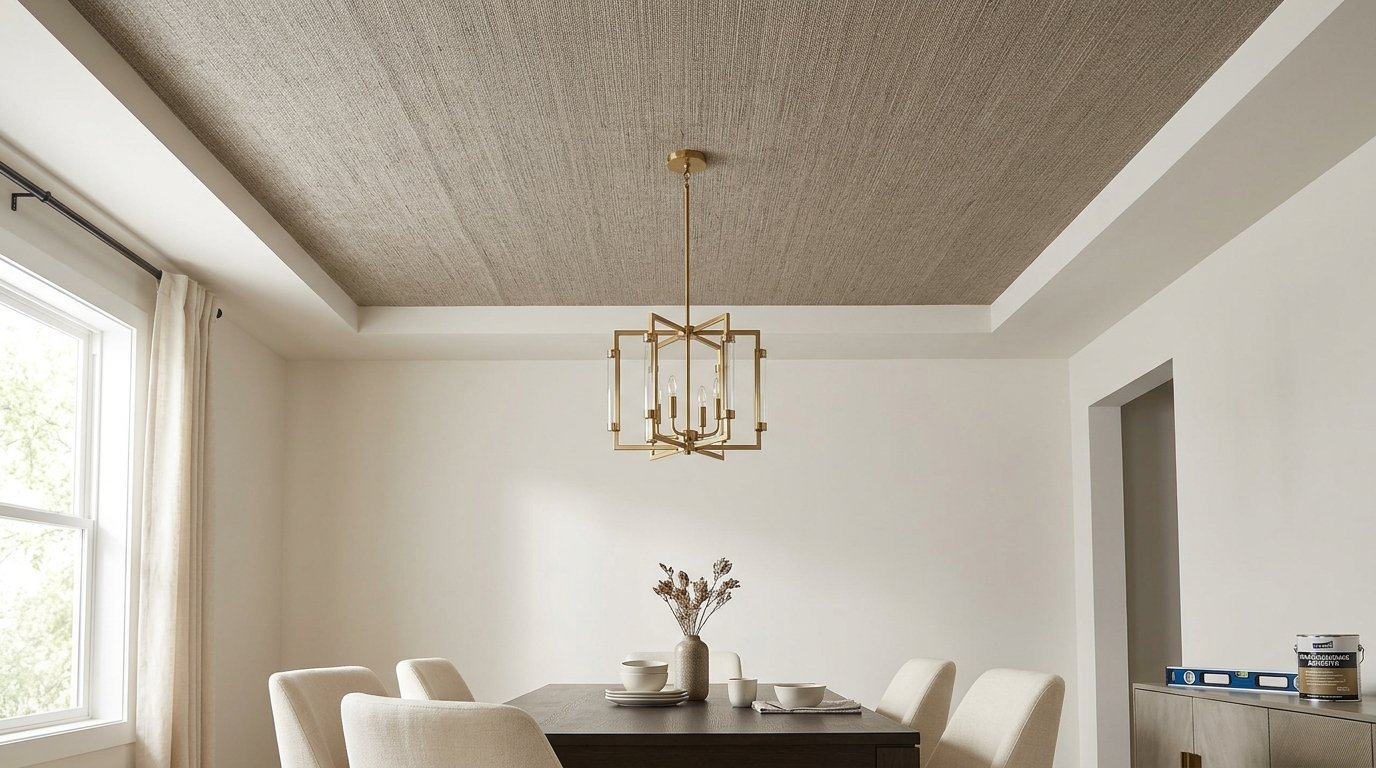
Ceiling wallpaper isn’t just some 2026 trend—it’s a bold game-changer when done for the right reasons. Installing a textured wallpaper ceiling treatment can make a room feel tailored, taller, and genuinely more special. But most guides gloss over what actually matters, from materials to maintenance and those “uh-oh” pitfalls nobody wants to fix later.
- Don’t do it because it’s trendy — do it for the right reasons
- Can your ceiling handle wallpaper? A quick structural checklist
- What to buy: materials, weight limits, and adhesives pros trust
- Real cost gameplan: DIY vs pro, ballpark ranges, and hidden extras to budget
- Step-by-step decisions that prevent the four most common failures
- Aftercare, acoustics, resale and what designers are betting on next
Don’t do it because it’s trendy — do it for the right reasons
Wallpapering your ceiling is never just about FOMO. The biggest wins happen when you treat the ceiling as a genuine “fifth wall,” pulling in pattern or texture with purpose—not because you saw it trending on Instagram for a hot minute. Here’s my no-spin take: a ceiling wallpaper design actually works magic in three big scenarios:
- You want the illusion of height. Vertical stripes, light-reflective metallics, and large-scale nature murals can pull the eye upward and expand the perceived space. Verified by a raft of designers and design week roundups.
- You’re seeking a true focal point—like in a minimalist living room or at the center of a dining area. Nothing builds “wow factor” faster (or for less) than a bold ceiling.
- Biophilic continuity is your goal. If you’re deep into natural surfaces and want your living room to feel like one immersive environment, wrapping ceilings in nature-inspired prints just makes sense. See this guide to biophilic design for why that matters.
Where ceiling wallpaper goes wrong: Extremely low ceilings feel claustrophobic with dark or heavy paper. Skipping essential prep on truly uneven, bumpy, or moisture-prone ceilings is asking for peeling and regret. Sometimes, a painted ceiling (see: color drenching) or a simple accent wall is the honest answer.
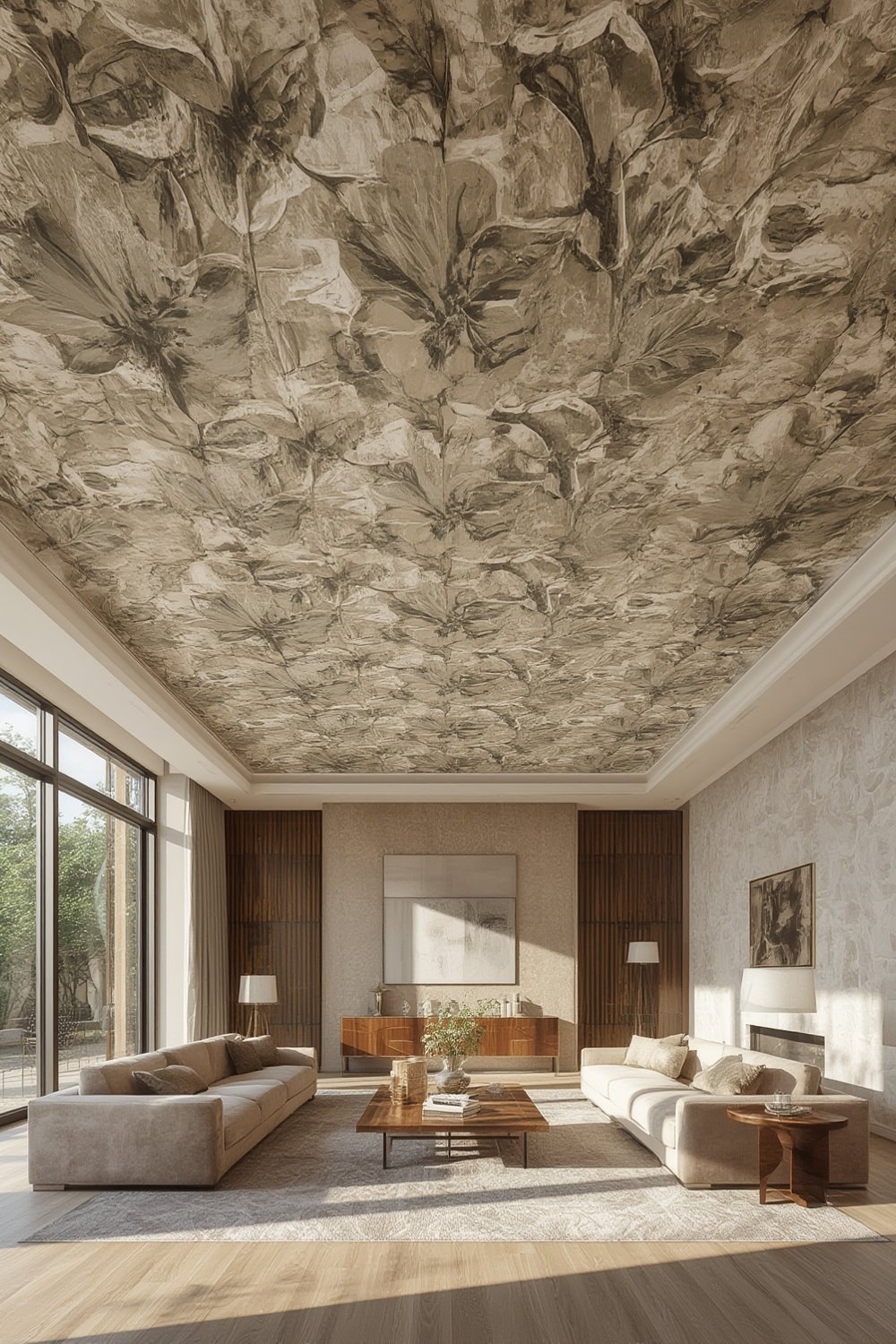
By 2026, giant murals, tropical leaves, and subtle geometrics have all but outpaced “feature wall” paint in residential spaces [HouseBeautiful]. But if your ceiling is popcorn-textured, full of hairline cracks, or not structurally up to it, you might be better off reading up on Roman clay or board-and-batten instead.
Can your ceiling handle wallpaper? A quick structural checklist
I see so many people skip this—don’t. Before you order patterned wallpaper, see if your ceiling passes these hurdles:
- Dry or humid room? Kitchens, bathrooms, mudrooms: only choose vinyl or moisture-resistant papers. Don’t even bother with grasscloth up there unless you’re okay with future stains.
- Substrate flatness: Slight old plaster texture? You can usually “float” the surface with lining paper or a quick skimming compound. Deep stomp or swirled plaster, or original popcorn? Remove or re-skim. Don’t trust “wallpaper covers flaws”—it’ll telegraph the mess underneath.
- Cracks and repairs: Hairline cracks can be filled. Structural or ceiling movement cracks—call a pro, don’t paper over them.
- Joist and insulation issues: If your ceiling flexes when someone walks overhead, or you see signs of leaks or mold, fix that first. Wallpaper adhesives hate ongoing moisture or movement.
- Ceiling height: Under 8ft? Avoid super dark or bold patterns. Above 9ft? The sky—literally—is the limit.
Most top guides barely mention compatibility by ceiling type. Mine: If you’re working with heavy texture or fresh water stains, pause—don’t proceed until that’s rectified. Dig into this spa-like bathroom guide if moisture is your main worry, or get the basics right from the complete home renovation checklist.
One overlooked win: If your old drywall has patchy repairs, a good vinyl or embossed pattern paper will hide a multitude of sins (as long as you feather the patches and prime first).
What to buy: materials, weight limits, and adhesives pros trust
Overhead wallpaper is an engineering problem as much as a design one. Not every wallpaper is made to hang upside-down. Here’s the smart homeowner’s playbook for buying materials:
Best Wallpaper Types for Ceilings
- Vinyl (solid sheet or thick non-woven): Impermeable, strong, and cleans up easily. Top choice for bathrooms and kitchens.
- High-end non-wovens: Lighter than vinyl, often pre-pasted, and less likely to sag—solid for bedrooms and living spaces. Go for “ceiling rated” weights if possible.
- Grasscloth: Stunning, unique, but a pain overhead. Heavier, shows seams, and is impossible to wipe clean. Great for dining rooms and studies—risky in kitchens or bathrooms. (See sidebar: “When grasscloth is magical—and when it’s a liability.”)
Wallpaper roll weights vary: basic non-woven or vinyl clocks in around 0.5 to 1.2 lbs per sq. yd. Grasscloth and heavy metallics go to 1.5–2 lbs/sq. yd. Why does this matter? Most standard adhesives cap out at 1.5 lbs/sq. yd. Paper any heavier, or on a ceiling over a heat source, and you’re risking gravity over time.
What Adhesives Pros Actually Use
- Premixed, extra-tack vinyl adhesive: For 90% of ceiling jobs. Roman Pro-880 or equivalent will hold up to 1.5 lbs/sq. yd. Don’t cheap out on paste for ceilings.
- Heavy-duty clay-based adhesive: Needed for grasscloth and some specialty papers. Costs $5–$8 more per gallon than basic paste.
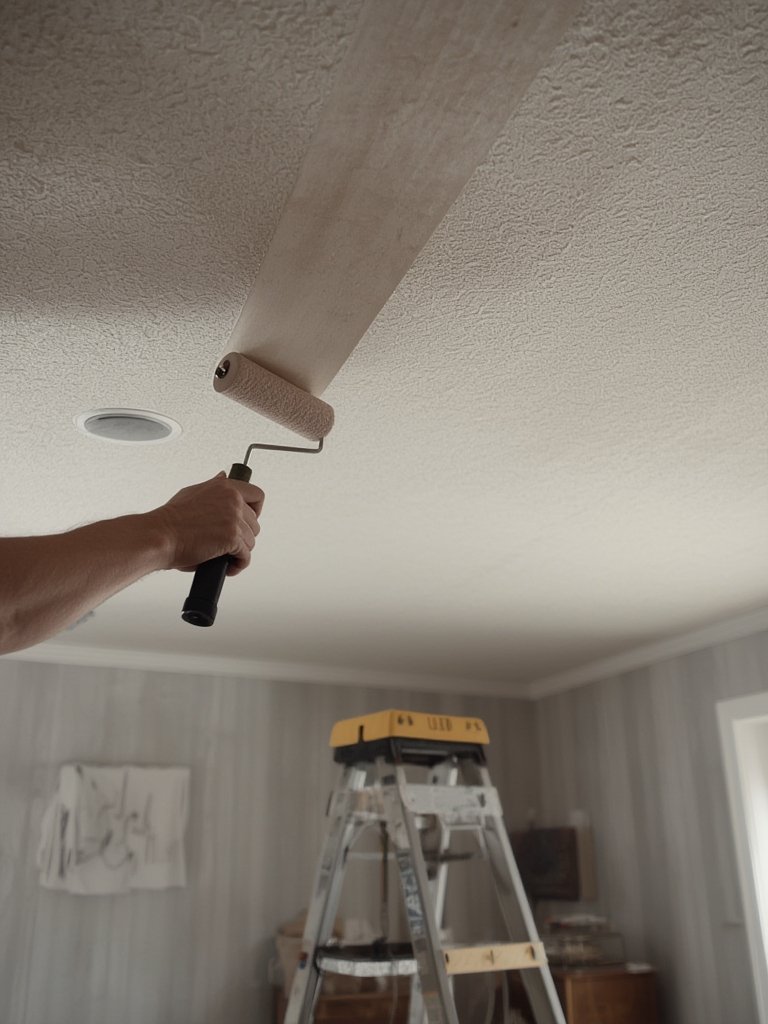
- Use a “crosshatch roller/brush technique for best grip, and don’t skimp on open time—get a helper.
Seams are less forgiving overhead. Plan for longest possible runs (perpendicular to the main light source), butt seams tightly, and number your panels. If your paper is bold or has a strong repeat, buy 15-30% extra for pattern matching and waste.
Fast Data Hygiene Check
Most sources skip weight limits and adhesive specs outright. For anything over 1.5 lbs/sq. yd., or specialty applications, get a quote from a reputable supplier or install pro. Ask for product weight, open/bond time, and tack strength when choosing your paper.
Curious how this fits in with your floor or wall plans? 2026 is the year of peel-and-stick floor tiles and wood-drenched ceilings too. Mixing materials? Make sure your adhesives and substrates are compatible between surfaces.
Real cost gameplan: DIY vs pro, ballpark ranges, and the hidden extras to budget
Let’s talk about what almost every 2026 “trends” article skips: real dollars. Most guides punt on this (probably to avoid the angry emails), but here’s what you need for budgeting a textured wallpaper ceiling treatment right now.
DIY vs Pro: When it Pays Off
- DIY: Cheapest (materials only)—assume $2.50–$6/sq.ft. for standard vinyl or non-woven, $7–$12/sq.ft. for grasscloth. Add $80–$150 for tools, adhesive, and ladders.
- Pro install: $8–$18/sq.ft. (mid/high cost-of-living cities). Grasscloth or complex patterns add 25–40% overhead for labor. Most pros have a square-foot minimum, often $600–$1,200 per ceiling, even on small rooms.
No, these are not “official” averages—2026 pricing still varies wildly by region and installer. Always get at least 2 local bids, and if you’re hanging grasscloth over a massive open-concept ceiling, plan for two pro days minimum (with helper fees).
Hidden costs commonly missed in all the gallery features:
- Wall prep: Skim coating, priming, patching, especially on old plaster or popcorn—$200–$800 average.
- scaffolding or a boom lift: Needed for ceilings above 10’. Forget step ladders unless you’re a gymnast.
- Pattern waste: Up to 25% more paper for bold repeats or murals.
- Pasting & seam matching labor: Time-consuming overhead, so pros may charge double their wall rate.
- Old ceiling disposal: If you need to scrape or replace substrate first, factor in contractor or dump fees.
Quick tip: If you’re sweating the budget, opt for a bold partial ceiling mural or a painted “fifth wall”, both covered in these color drenching techniques. They deliver similar visual drama for far less pain.
Data hygiene note: No major publication had hard 2026 pricing stats (annoying but true), so plug in local numbers from one installer and one supplier before committing.
Step-by-step decisions that prevent the four most common failures
The difference between an Instagram win and a disaster? Finishing the unglamorous details. Here’s how pros prevent the classic ceiling wallpaper mistakes:
1. Surface Prep
Prime the ceiling with a quality, stain-blocking primer. If there’s old texture or hairline cracks, skim and sand until flat. Lining paper helps, but it’s not a cure-all for real damage. Never wallpaper over damp, bumpy, or “dusty” ceilings.
2. Adhesive Choice and Application
Follow the manufacturer’s recommendation by wallpaper type (see above). Mix adhesive fresh, roll in crosshatch, and let it go tacky per the label. On heavy or textured paper, a helper is non-negotiable. Gravity is working against you—so support sections as you smooth.
3. Seam Sequencing & Pattern Strategy
Always start against the main straight wall, usually opposite the primary light source. Number your panels. For bold or repeating patterns, lay out panels on the floor before starting—don’t “wing it”. If your pattern is geometric or mural-style, invest in extra paper for matching, and cut seams with a fresh blade every 4–6 feet.
4. Tack, Curing Times & “Watchouts”
Leave each section supported (even with painter’s tape) for recommended curing—usually 24 hours before any big temperature/humidity swings. Watch for bubbling, peeling, and gapping—if it happens on more than one panel, stop and call a pro.
Red flags to pause: Wet stains, recurring leaks, visible ceiling movement (especially in older homes), or papers significantly heavier than standard. Trust me: don’t wallpaper through those. Call in help.
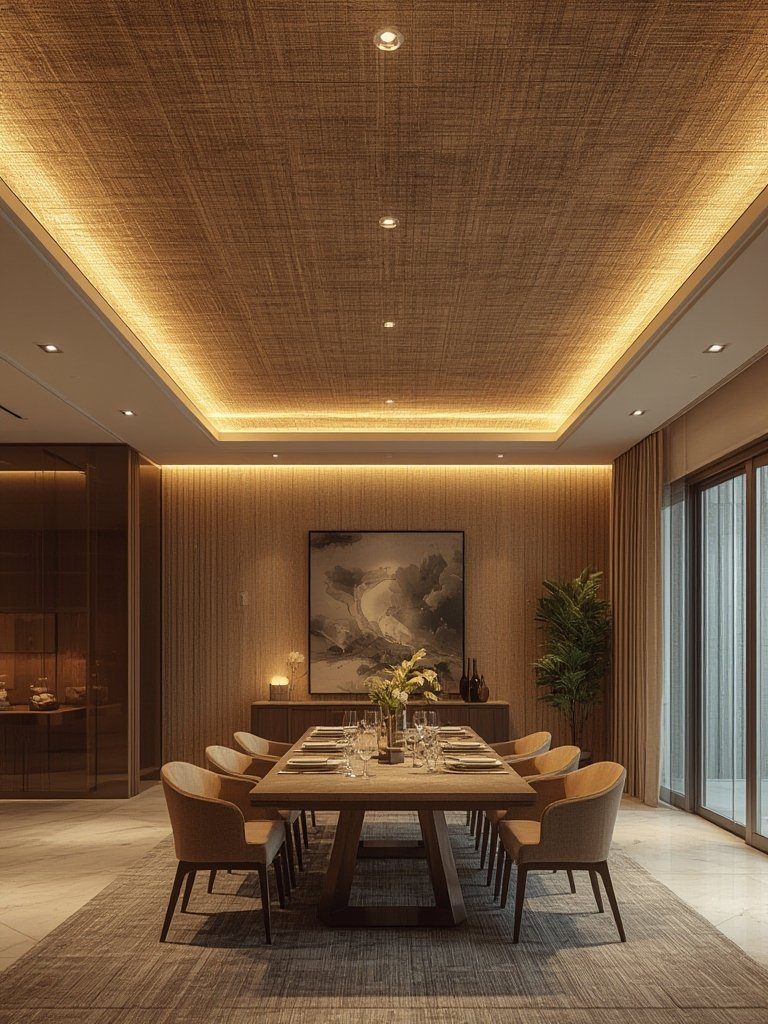
Love the look but fear the fuss? Many of my clients opt for removable wallpaper, but be warned: most “peel and stick” options are not rated for ceilings (adhesion issues). Only use products tested for overhead installs, or stick with classic paste papers.
Aftercare, acoustics, resale and what designers are betting on next
This is the section the glossy magazines always skip. Ceiling wallpaper—especially textured or patterned—comes with user responsibilities. Here’s the lowdown:
Maintenance & Longevity
- Vinyl and “scrubbable” non-wovens: Wipe gently with a damp microfiber cloth. Avoid abrasive sponges or industrial cleaners—edges can lift.
- Grasscloth or natural fiber: Absolute worst for cleaning. Hit with a duster, vacuum nozzle, or dry soft brush, but never wet. Even water can stain.
- Monitor for seams loosening, especially in rooms above showers or kitchens—reseal with adhesive as needed, or call your installer for a pro fix.
Acoustics: What can you expect?
I get this a lot: will wallpaper on the ceiling help with noise? Modestly, yes. You’ll notice a slight reduction in echo, especially with heavy, embossed, or textured paper (like grasscloth). Don’t expect full-on sound absorption as you’d get from acoustic panels or cork tiles. If acoustic improvement is your top priority, consider layering with soft furnishings, rugs, or wood ceiling treatments, which do more for deadening sound.
Resale Value & Space Perception
Every agent I’ve asked says bold ceiling wallpaper can raise perceived room value—if it feels intentional and on-trend for the home’s style. In practice, clean, high-quality installations that play on light or vertical scale (metallic, mural, pale botanicals) are safest. Obnoxiously dark or dated patterns might quarter your buyers in future years, so choose wisely. (Still, not one major source published specific resale data to date.)
2026 Trend Predictions
- Nature-inspired ceiling prints aren’t going anywhere—think maximalist palms, oversized florals, or even landscape murals for a “skylight” effect [Decorilla].
- Metallic geometrics, terracotta tones, and vintage botanicals are crowd-pleasers. See the rise of handcrafted texture tiles and unique ceiling finishes.
- Materials? The field’s splitting: super durable vinyl for wet rooms, curated grasscloth in grown-up spaces, and smart “hybrids” that combine the best of both. Texture and subtle shine still beat flat patterns for ceiling drama.
If you want trend insurance, go for classic foliage prints or subtle metallics that flatter a range of color drenching or English country kitchen palettes. Or check out this editorial for jaw-dropping ceiling inspiration.
Choosing a textured wallpaper ceiling treatment is a true statement—but it’s one that demands respect for detail, surface, and budget. If it feels like the right move for your home, follow the field-tested playbook above, pay attention to what real installers and material suppliers say, and you’ll avoid almost all the classic mistakes that trip up those chasing the trend for its own sake.
Can I put textured wallpaper on a popcorn ceiling?
Short answer: Not directly. Popcorn texture (especially the thick, cottage cheese kind) needs to be completely removed or skimmed flat first. Attempting to paper over it will cause adhesion problems and show every bump. Skim with joint compound, sand smooth, prime, and then proceed.
Is ceiling wallpaper safe for bathrooms or kitchens?
If you stick with vinyl or true moisture-resistant papers, yes—so long as your ceiling is fully prepped, sealed against leaks, and you use recommended adhesive. Grasscloth and other natural fibers are a big no in steamy or splash-prone spaces. For more on wet-area upgrades, peek at our spa-like bathroom design guide.
How do you clean a ceiling with grasscloth wallpaper?
Do not use water or liquid cleaners—ever. Use a dry microfiber duster, a clean vacuum brush attachment, or a feather duster. Even a damp cloth can cause discoloration. For regular dust, stick to gentle, dry cleaning only.
What mistakes do most DIYers make with ceiling wallpaper?
The big ones: skipping prep (priming/skimming), choosing heavy/cheap wallpaper or too-light adhesive, rushing seams (especially with repeat patterns), and pushing ahead with texture, stains, or leaks still present. It’s always better to pause and prep than fix later. If you spot bubbling, sagging, or seams pulling fast, call a trusted installer.