



The kind of living room where conversation flows, art replaces television, and a statement coffee table sculptural enough to make guests ditch their phones is front and center. You can picture it—but what’s the trade-off for all that drama? Beautiful centerpiece, or awkward decor hiccup you’ll regret? If you want a coffee table that truly doubles as art, this is how you pick (and live with) one that belongs.
- When a coffee table is a sculpture: make sure the statement really lands
- Practical deal-breakers designers always check (before you order or commission)
- Material choices that read like art—and what each really costs you (beyond the sticker)
- Three unexpected coffee-table moves top designers try (and how to adapt them to your living room)
- What most top articles skip — sourcing, vintage integration, and sustainability
When a coffee table is a sculpture: make sure the statement really lands
You want an artistic coffee table—not just another surface to pile magazines or mail. The question is: do you want a table you can actually use day-to-day, or something that shouts “I have taste”, even if it means stretching your comfort zone?
Most people (even the ones with designer budgets) stumble here. Not every oversized coffee table or wild-shaped art object will anchor your living room in a good way. A table can look custom in one room and utterly lost or clunky in another. There’s a reason you rarely see those jaw-dropping sculptural pieces in homes with tight walkways, minimal natural light, or heavy traffic from kids and pets.
To avoid regret, ask yourself:
- Does my room want a showstopper or will it compete with other big “moments” (curved bouclé sofa, bold rug)?
- Can people easily walk around the table, or does it make the seating arrangement feel cramped?
- Will anyone actually rest a glass on this thing, or is it reserved for coffee-table books only?
- Am I planning to move in the next two years (do I want the installation hassle—again)?
Here’s the honest reality: impulse buying a huge sculptural coffee table because it photographs like an Italian penthouse almost always backfires if you don’t check your room’s scale and how you actually live. Interior trend reports in 2026 confirm sculptural tables are still in high demand[artspirehome], but actual stats and buyer regrets? No hard numbers—just a lot of envious Instagram comments.
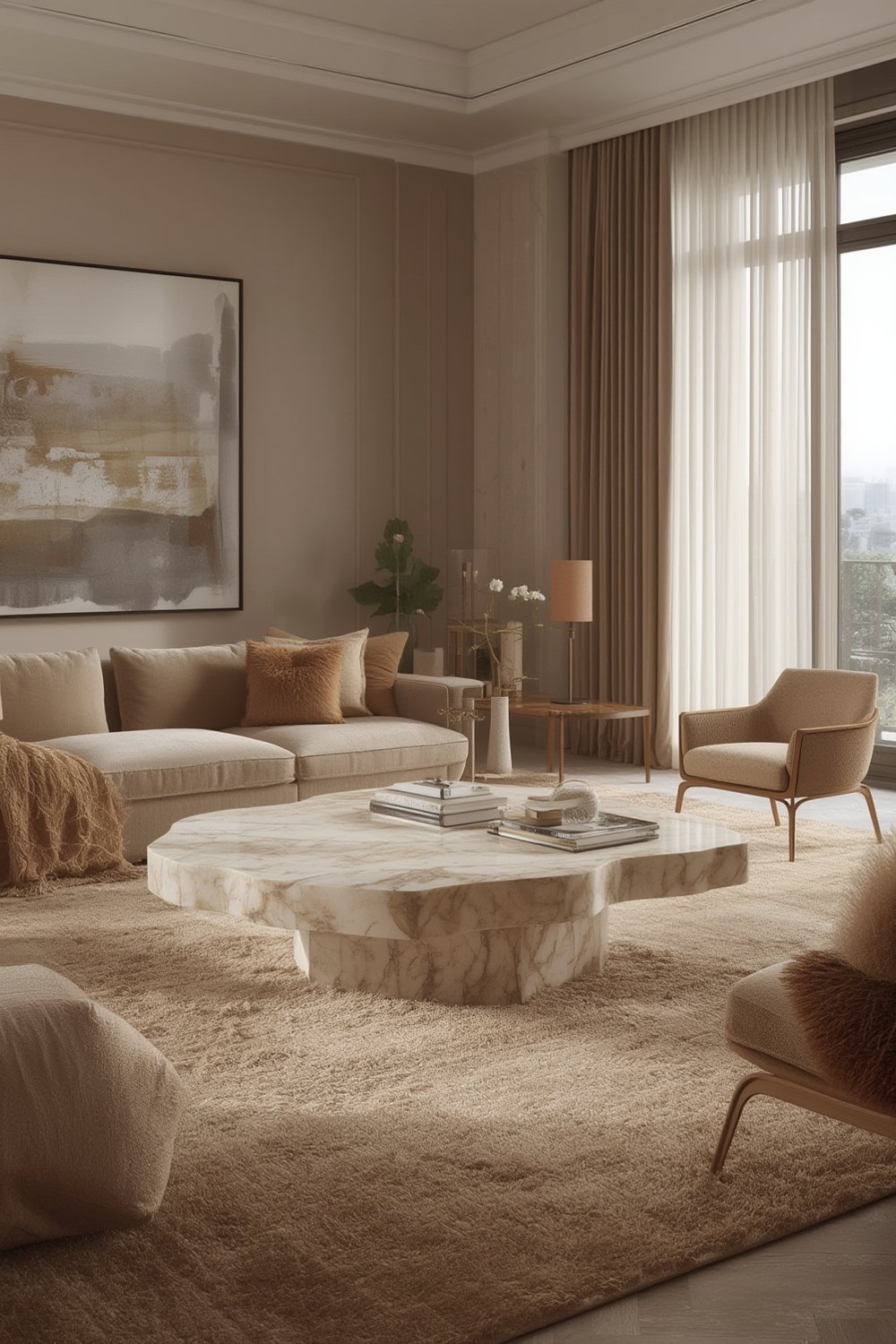
Practical deal-breakers designers always check (before you order or commission)
If there’s one reason pro designers never get caught out on big-ticket tables, it’s this: they know what’s non-negotiable. Out in the wild, most “unique coffee table designs” get sorted into two piles after a year—brag-worthy, or buyer’s remorse because they’re impossible to live with.
- Is it stable, or wobbly after one bump? Odd geometries and three-legged pieces look sensational but feel terrifying if guests keep knocking them. Professional-grade stability (think low center of gravity, beefy tripod, or weighted base) matters a lot more than most people expect.
- How much does it weigh—and will your floors, or back, forgive you? Real stone, marble, and solid plinth tables can easily hit 100–300 pounds. You’ll want thick felt pads for wood floors or a dolly on delivery day. Don’t rely on curbside delivery; book white-glove service unless you relish bruised door frames.
- Height and clearance matter. That seven-inch-high stunner might be brilliant as an “art object coffee table,” but if the seat of your deep plush sofa is 18 inches above the floor (see deep seat sofa), it’s useless for actually setting down a drink. Size up clearances: 15-18″ high, 14-18″ distance to surrounding seats.
- Safe edges (especially if you have kids or pets). Sculpture means curves, but also sometimes sharp corners. Some designer pieces are more dangerous than they look—don’t trust staged gallery photos.
- How are you going to clean it? Travertine, white marble, or raw concrete tables stain in minutes if you don’t seal or use coasters. Glass, meanwhile, shows every fingerprint. If a unique table needs oiling, buffing, or special sealant every month, that’s a pain point buyers almost never factor in.
- Fit in doors, elevators, stairs? Plinth, trunk, or “whoa” giant cube tables can be too large for standard doorways. If a table doesn’t break down, insist on seeing photos of it going through “real world” doors, not just swoon-worthy shots in a wide-open gallery.
It’s worth reading vintage accent chair advice for how the pros mix old and new—these same practicality checklists apply to mix-and-match living rooms.
Material choices that read like art—and what each really costs you (beyond the sticker)
You’ve got about three solid options here: sculptural stone coffee table (travertine, marble, sometimes onyx or concrete); composite/fiberglass art pieces; or a vintage trunk coffee table if you want history with your statement. Then there’s the oversized, gallery-only stuff—true art object coffee tables, which can get wild (and wild-expensive).
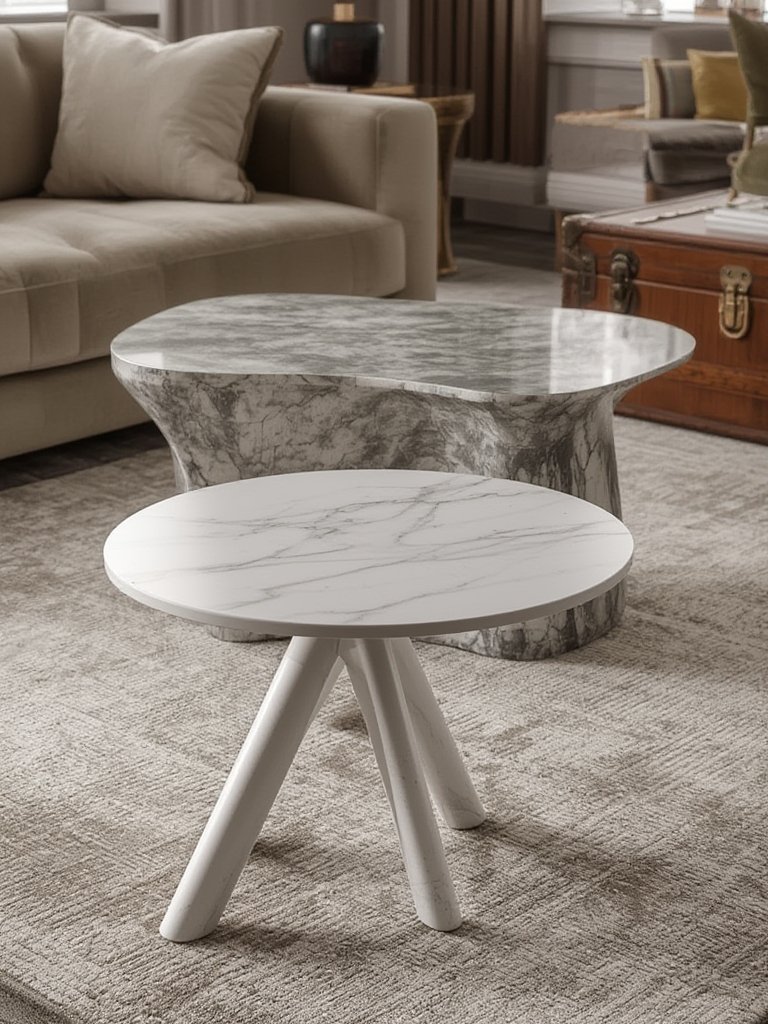
Stone (Travertine, Marble, Plinth Sets)
Gorgeous, heavy, and every bit as cold to the touch as you’d expect. The natural veining in travertine or marble makes each sculptural stone coffee table unique—buyers will pay a premium for a particularly striking slab, veins that flow over all sides, or rare colorations. If you want your table to outlive every sofa in the house, this is the move. But know this: limestone and travertine stain if you forget to Seal travertine or marble, and marble hates acidic cleaners. Expect to pay not just for the rock, but for skilled craftspeople, crating, and white-glove delivery. (No, there’s no reliable price-per-slab data for 2026, but anything hand-finished, custom-sized, or rare? Budget high.)
Fiberglass & Complex Composites
These pop up in those “unexpected coffee table ideas” roundups—playful, lightweight, and shockingly durable if made right. They shape easily into wild curves or tripod bases, often finished in glossy mid-century shades. The reality: custom work costs more unless you catch a local maker or boutique brand. You do sacrifice some visual depth compared to high-end stone. The upside: a three-legged fiberglass tripod can actually survive spills, toy car crashes, or being moved for party layouts.
Vintage Trunks and Repurposed Objects
If you’re game for achieving an oversized coffee table vibe on a budget—or just want something with a past—hunt out old steamer trunks, factory workbenches, or campaign chests. Vintage trunk coffee tables aren’t just surface; they double as storage. Pay attention to hardware (brass corners look chic but can catch ankles), and inside smell (old trunks sometimes need a deep ozone treatment). Pitfall: not all vintage looks deliberate—if styling’s off, it just looks like you left moving day unfinished. Check pairing tips in the section on integrating vintage below.
Keep Trade-Offs in Mind
No matter how Instagrammable, every art object coffee table has trade-offs:
- Heavy stone is forever—until you want to move it.
- Fiberglass can chip if whacked hard, and painted finishes sometimes age poorly (I’ve seen yellowing happen in sun-drenched rooms).
- Vintage wood objects need maintenance (re-oiling, hardware tightening).
- Shipping anything oversized is about double the headache and cost—don’t underestimate this line item.
Painfully, there’s no spreadsheet breaking down price-by-material for 2026. Shop savvy: rarity, handwork, finish quality, and delivery logistics drive numbers as much as the materials themselves[1stDibs].
Want to spot wood that will last? Deep graining, tight joinery, and a finish that doesn’t scuff if you hit it with a mug—the same “look and touch” rules as discussed in the dark walnut furniture guide.
Three unexpected coffee-table moves top designers try (and how to adapt them to your living room)
Forget standard rectangles and bland glass. If you want to steal a designer look or just surprise your guests (without dropping five figures), here’s what’s actually happening in memorable living rooms this year:
- The three-legged fiberglass tripod
Dramatic in the right setting—think sculptural, low-slung form that carves a visual anchor. These work best off to one side, grounded on a textured rug (like a chunky loop or silk blend) rather than dead center. If custom is out of budget, look for plant stands or side tables in bright gloss colors; group two for a similar vibe. - Undulating wave marble-glass hybrids
True art object coffee table territory. The originals are rare and pricey, mixing hand-blown glass with carved stone. They shine flanked by streamlined seating—an organic shaped sofa with curves or a small mid-century club chair. To hack this look: try a curved-edge acrylic top set on an undulating wooden base painted marble-effect. Layer a geometric, flatweave rug below. - Multi-level plinth sets or stacked cubes
These read like a mini installation and work beautifully when your room has space to breathe. Place the tallest plinth farthest from the sofa, then stagger shorter cubes toward where you sit—think a functional step-down effect. Top designers opt for mixing materials: stone with lacquer, matte wood with colored acrylic. If budget’s tight, group two or three side tables of different heights in similar colors for a curated effect.
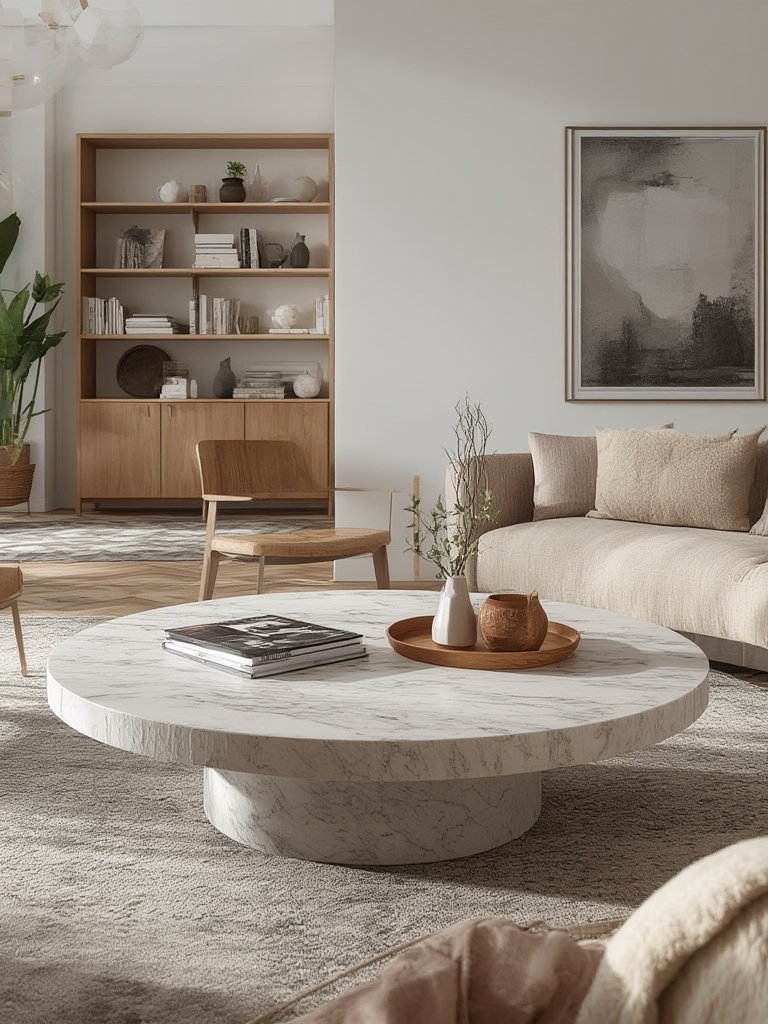
You’ll see these layered, unexpected coffee table ideas featured in the best furniture showrooms, but you can pull the look together at home by playing with scale and contrast. Tie everything together with a soft rug (see skirted upholstered furniture for a fresh layering idea), and keep at least 18 inches between table edge and seating for walkability.
For a quick win, download my one-page buyer’s checklist and sketch your furniture layout on it before jumping at that irresistible sculptural piece.
What most top articles skip — sourcing, vintage integration, and sustainability
The biggest gaps in online hotlists? Where to find one-of-a-kind or gallery-sourced pieces, how to make sculptural and vintage work together, and what to ask about sustainability. Most best-of lists ignore these, yet they matter to design-minded homeowners who aren’t satisfied with mass-market “unique” tags.
Sourcing Real Originals—and What to Ask
If you want an art object coffee table that no one else on the block will have, don’t just stick to e-comm giants. Check with local gallery shops—many represent furniture artists who only make 10–20 tables a year, and the price often includes in-person installation. For limited editions, ask for:
- Origin and maker—Is it signed? Is there a provenance or story?
- Photos in real homes, not just staged sets
- Full install and delivery details—Who does the lifting? What if doorways are too narrow?
I’ve also had success searching the “trending furniture” sections of vintage marketplaces—sites like 1stDibs are expensive, but smaller regional vintage shops (sometimes listed on platforms like Artspires) occasionally have unlisted gems.
Making Modern Sculptural + Vintage Furniture Work
The best rooms mix eras with intention. Don’t just plunk a wavy marble coffee table next to grandma’s tufted velvet settee unless you reference color, scale, or metallic details. (A trick: pull a color from the stone’s veining or a metal from trunk hardware, and use it for accent pillows or a side lamp.) More on this approach in vintage accent chair: how to increase value.
Want more layering tips? Read up on small scale seating—it’s a cheat sheet for integrating substantial tables into tight spaces without visual overload.
Sustainability: Questions Most Overlook
You care about unique coffee table designs with substance, not just style. Yet, almost none of the top-ranking articles dig into what makes these pieces environmentally sound. If this matters to you (it should in 2026), ask sellers:
- Is the stone or wood reclaimed, or certified sustainable (like FSC)?
- For resins and fiberglass, are the materials low-VOC and produced in a closed-loop facility?
- Can the finish or coating be renewed, or will it chip and get tossed in three years?
- Any transparency on transport footprint? Most oversized coffee tables rack up huge shipping emissions.
For more on this, my sustainable reclaimed wood furniture guide covers what real eco-friendly sourcing should look like for modern buyers.
For those who want curated direction, here’s my suggested next steps:
- Download: The Sculptural Table Purchase Checklist (one page, room layout, material & install prompts)
- Request from sellers: Not just measurements, but real installation and in-home photos. Anything that travels from a warehouse may look utterly different when paired with your lighting, rug, and sofa scale.
If you actually want living room art that lasts—and won’t be dragged out to the curb next year—get obsessed with detail.
“Statement coffee table sculptural” pieces are the hardest-working way to anchor a space if you pick with honesty about how you want to live, not just what you want on your feed.
What size should a statement coffee table be for a standard living room?
Usually, aim for 15-18″ high (to match most sofa seats). The footprint ideally runs 2/3 the sofa length. Leave at least 14-18″ between table edge and seating so people can walk around easily.
How do I clean a stone or marble sculptural coffee table?
Use a soft, damp cloth and avoid acidic or abrasive cleaners. Seal travertine or marble every 6-12 months to prevent stains. Always use coasters for drinks, especially with citrus or wine.
Can a sculptural statement coffee table work in a small room?
Absolutely, if you get the scale right. Look for lower, openwork bases or clear acrylic/fiberglass that don’t visually block space. Avoid chunky solid blocks unless you have plenty of clearance and minimal other furniture.
Where is the best place to source one-of-a-kind coffee tables?
Try reputable art galleries, designer showrooms, or vintage markets (not just online chain retailers). Verify authenticity by asking for maker details and photos in actual homes, not just staged sets.
For more advice on clever living room layouts, check out modular sectional sofa or multifunctional storage ottoman articles. For the softer, more curated side of living room design, my skirted upholstered furniture guide is a smart next read. Want to compare organic shapes? See biomorphic furniture. For a one-sheet on all the nitty-gritty measurements and install red flags, use the download link above or drop your questions in the comments—I answer every message.
Bottom line: a statement coffee table sculptural enough to feel like art can be practical, as long as you stay picky about the real-life trade-offs and see more than the styled photos.
—