


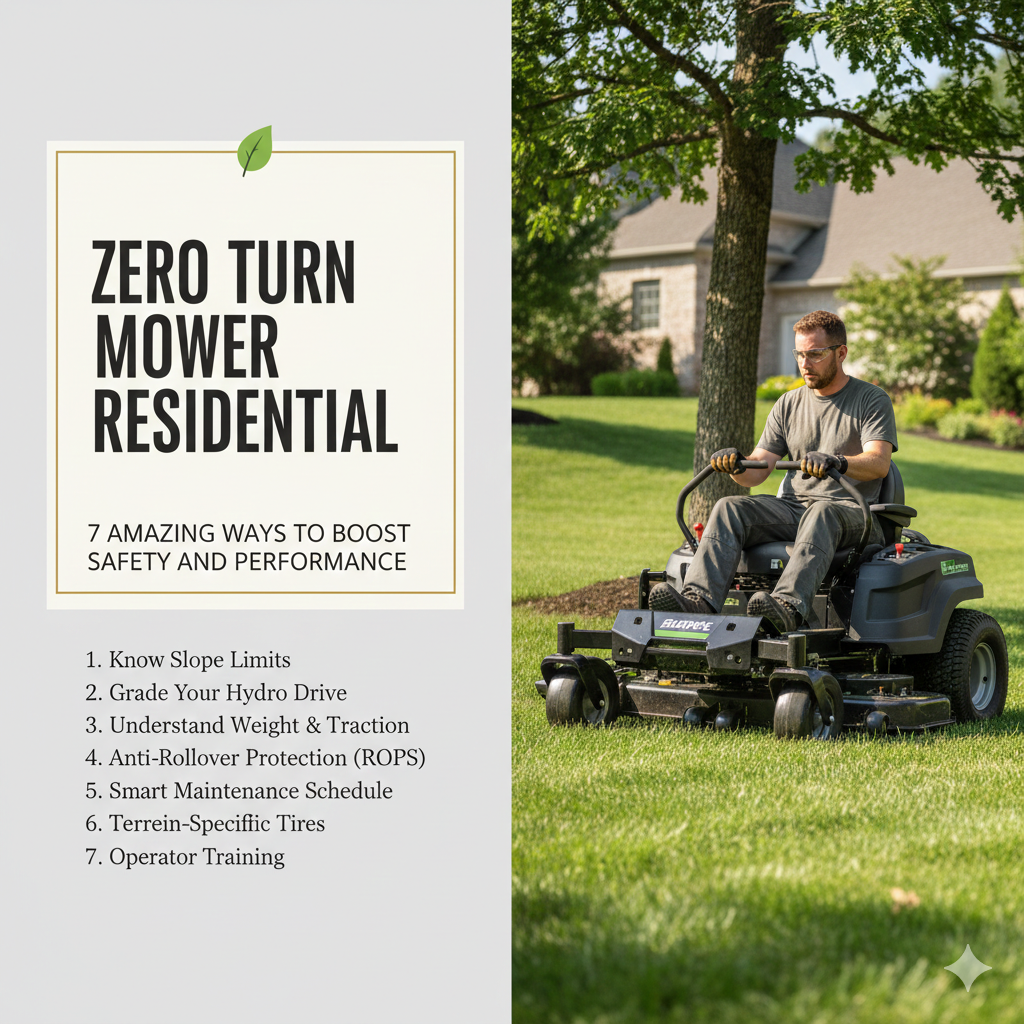
Zero turn mower residential buyers want the best cut, fastest mow, and real hill performance, but hidden costs and safety risks can trip up even savvy homeowners. In this guide, get clear facts and proven steps for choosing, using, and maintaining a residential zero-turn mower that actually fits your lawn, budget, and long-term needs.
Key Takeaways
- Zero turn mower residential offer fast, precise mowing but can struggle with steep slopes, uneven ground, and long-term durability if under-specced.
- Knowing real slope limits, total cost of ownership, and overlooked safety features helps avoid expensive mistakes.
- Bigger isn’t always better—deck size, weight, hydro drive grade, and warranty matter more for hilly lawns than headline horsepower.
- 1. What Makes a Zero Turn Mower Residential—and Why It Matters
- 2. Step-by-Step: How to Choose and Use a Zero turn mower residential for Slopes
- 3. Advanced Analysis: Common Pitfalls, Market Data & Comparison Table
- 4. Conclusion
- 5. FAQ
1. What Makes a Zero Turn Mower Residential—and Why It Matters
A zero turn mower residential is a ride-on mower engineered for home lawns that delivers outstanding maneuverability and cutting speed thanks to its caster-style front wheels and dual hydrostatic drive. Unlike lawn tractors, these mowers let you pivot around trees and tight beds while getting more done in less time—if you choose the right setup. The catch? Many residential models sacrifice hill stability, hydro drive strength, long-term durability, and real safety features to hit a price point, leaving homeowners struggling on slopes.
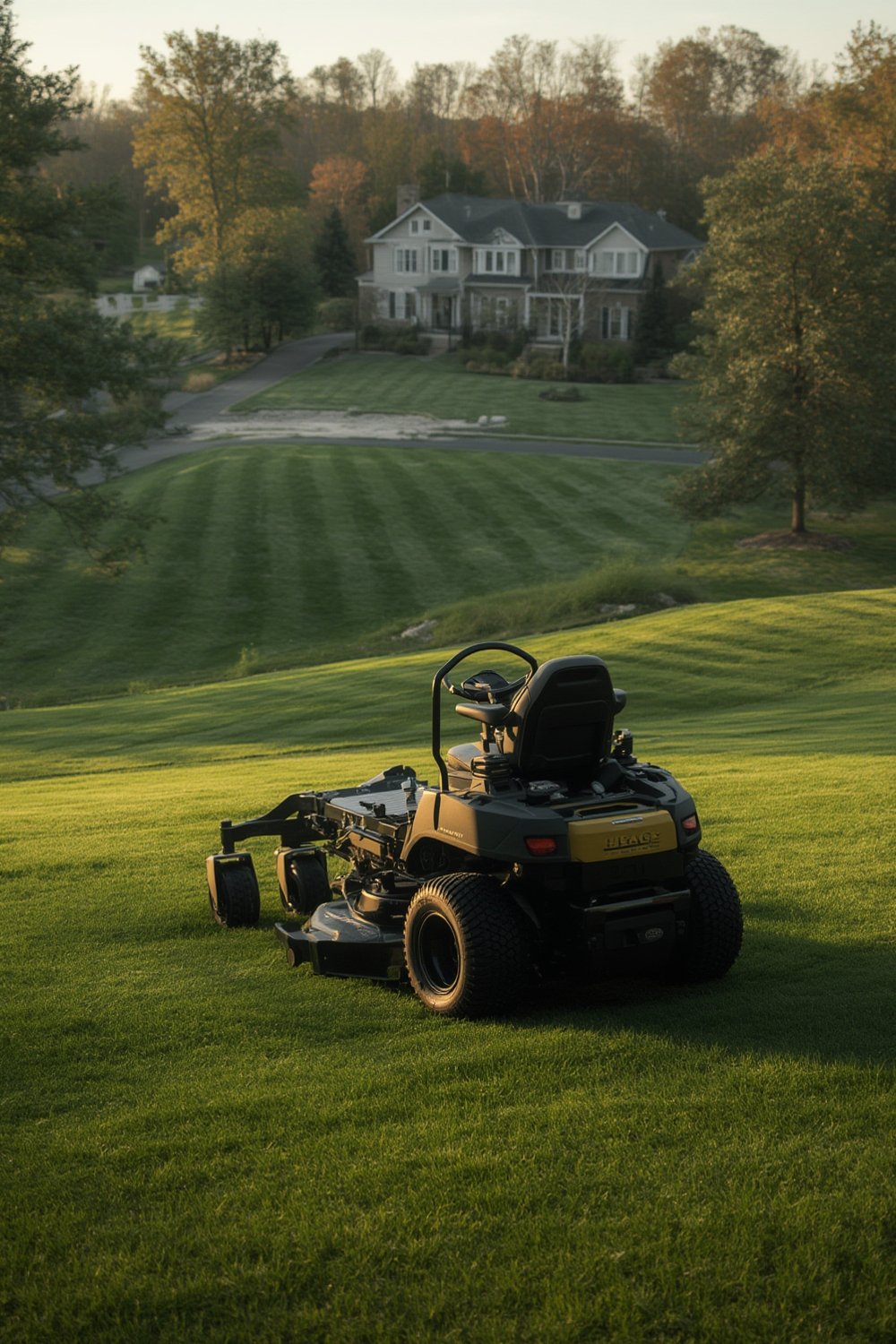
The booming North American market—expected to grow to $4.16B by 2035 (source)—means hundreds of choices. Growth is fueled by more homeowners ditching landscaping services and the rise of robotic mower alternatives for flat lawns, making it critical to understand where residential zero turns shine, where they falter, and how new electric models like the John Deere Z380R are changing the options (source).
2. Step-by-Step: How to Choose and Use a Residential Zero Turn Mower for Slopes
Not all zero turns are created equal, and using one on hills, ditches, or bumpy lawns takes more than just reading the spec sheet. Follow these actionable steps to get the most from your mower—and keep yourself and your turf safe.
- Assess your lawn’s true topography: Map out the steepest spots with a digital level app. If any section exceeds 15 degrees, plan to use a string trimmer or look into robotic or stand-on mower alternatives for those areas.
- Match mower grade to usage: For properties over 1.5 acres with slopes, invest in a “prosumer” or premium residential model (usually $4,500–$7,500+) with a fabricated deck, up-rated hydros, and at least 22–24 hp. For frequent hill work, check for serviceable hydros, not “sealed” units.
- Choose deck width and type carefully: On hilly or rough terrain, 48–52-inch fabricated decks hit the sweet spot—wide enough for productivity, narrow enough to minimize scalping and weight. Add anti-scalp wheels if not standard.
- Evaluate engine or battery: Gas V-twins with full-pressure lube handle slopes best. For electric zero turns like the Z380R, compare run-time under hill load—not just flat-ground numbers.
- Check real-world ergonomics and safety: Test seat comfort, lever smoothness, and deck lift pedal placement—especially if you’ll spend more than an hour per mow or cross ditches. Ask if dealer-upgradable ROPS is available.
- Mow slopes safely: Always mow slopes up and down—not across. Engage the slowest, most controlled lever movements, and never turn on a steep grade. If tires start to slip, back down slowly rather than trying to power out.
- Maintain before problems multiply: Inspect hydros, belts, and deck after every few mows on hills. If you notice power loss, extra noise, or hydro overheating, take action early—most consumer reviews cite major pains in DIY repair access. If in doubt, use a local dealer with fast parts turnaround.
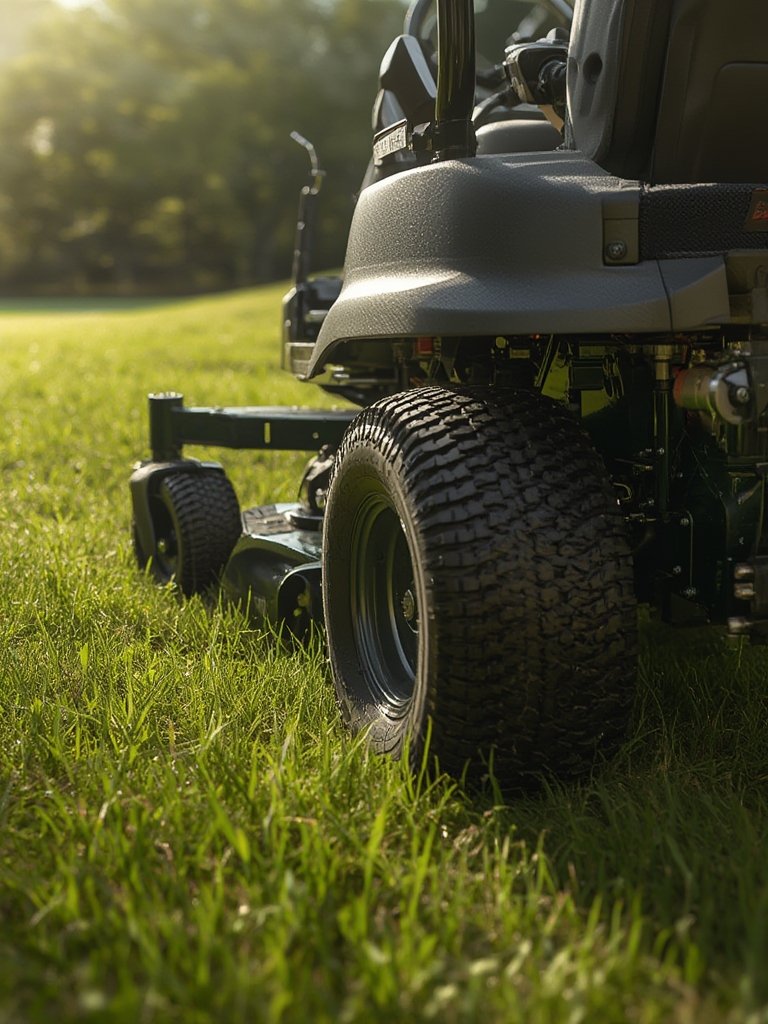
Finally, factor in total cost—not just purchase price. Include annual spend on blades, belts, fuel, and if electric, battery replacement mid-life. For more sustainable, low-maintenance options, consider a partial lawn to meadow conversion to reduce mowing frequency and environmental impact.
3. Advanced Analysis: Common Pitfalls, Market Data & Comparison Table
Buying and running a residential zero-turn mower isn’t all fast mowing and stripes. Here’s where most homeowners fall short—and how to avoid it.
Top Pitfalls to Avoid
- Overestimating Slope Ability. Most Zero turn mower residential are not safe or warrantied for slopes over 15°. Attempting steeper grades quickly leads to slides, turf damage, or rollovers.
- Choosing a Deck That’s Too Wide. 54-inch+ decks scalping hills and missing dips. Bigger decks often overload lighter residential frames and hydros on uneven lawns.
- Ignoring Transmission Serviceability. “Sealed” hydros force a costly total replacement when worn out—especially faster if you mow hills regularly. Look for filter and reservoir access.
- Missing Long-Term Costs and Warranty Fine Print. Repairs and replacement belts, blades, or batteries add up. Many brands slash warranty length for “commercial” or high-hour residential use, and some restrict coverage for hill operation.
- Underestimating Fatigue and Ride Quality. Rough ride on uneven yards leads to operator fatigue. Upgrade seats or look for models with suspension, especially if you mow more than an hour at a time.
Residential vs Commercial Zero turn mower residential Comparison (2025 Typical)
| Feature | High-End Residential (Prosumer) | Commercial |
|---|---|---|
| Deck Size | 48–60″ | 54–72″+ |
| Engine Power | 22–26 hp gas / 4–15 kWh battery | 23–35+ hp gas/diesel High-capacity battery |
| Top Speed | 6–8 mph | 10–12 mph |
| Expected Hours/Year | 50–150 | 200–1000+ |
| Frame & Deck Build | Lighter but some use fabricated decks | Full welded, thick steel, commercial hydros |
| Hill Performance | Fair, best only on moderate slopes | Good–Excellent; heavier, stronger hydros, more stable |
| Price (2024–2025) | $4,500–$9,000+ | $7,000–$18,000+ (some battery >$25K) |
| ROPS/Seat Belt | Rarely standard (some prosumer offer as option) | Typically standard |
| Maintenance Cost | Lower up front, but may have shorter hydro life on hills | Higher but longer intervals; serviceable hydros |
| Common User Pain Points | Traction loss, sealed hydros, rough ride on bumps, warranty loopholes | Weight & rutting, high upfront price, complex maintenance |
Market insights from Grand View Research and Research Nester show gas power and 50–60″ deck sizes still dominate, but battery options are growing fast—especially in residential. Learn more about electric/robotic mowing and setup at our detailed robotic lawn mower installation guide.

Finally, for those interested in ecological, low-maintenance solutions, check out chaos gardening and native pollinator plants to reduce reliance on intensive lawn mowing altogether.
4. Conclusion
Choosing the right zero turn mower residential option is about much more than headline speed or flashy deck size. Prioritize slope safety, serviceable hydros, modest deck widths, and unbiased warranty coverage to get the best results on your unique terrain. Be realistic about hills—accept the 15° slope cap, or upgrade to a commercial model if your property consistently exceeds it.
Ready to upgrade your mow? Visit your local dealer, ask about demo rides for your lawn’s actual slopes, and double-check maintenance support before you buy. For a smarter, cleaner yard, consider blending your zero turn with EV charging or meadow planting projects as future-proof ways to maximize your property’s value. Don’t settle for just any Zero turn mower residential—choose based on how you’ll zero turn mower residential safely and efficiently for years to come.
5. FAQ
What is the maximum slope a zero turn mower residential can handle safely?
Most zero turn mower residentials are rated only for slopes up to 15 degrees. Exceeding this increases the risk of sliding or rollover and usually voids warranty coverage.
Are electric zero turn mower residential good for hilly lawns?
Modern electric models like the John Deere Z380R Electric ZTrak offer solid performance on moderate slopes, but gas-powered units with full-pressure oil systems still outperform on continuous hill work or larger acres. Always check real-world run time data under hill load.
How do I avoid tearing up my grass with a zero turn mower residential on hills?
Use slow, smooth lever inputs and avoid quick pivots or turns on inclines. Add anti-scalp wheels and operate in straight up-and-down passes, not across slopes, to reduce turf scuffing.
Do all residential ZTRs come with rollover protection (ROPS)?
No. Most entry and midlevel residential mowers do not include ROPS by default. ROPS becomes more common in prosumer or commercial lines, often as an optional kit.
How often should I service a hydrostatic transmission on a zero turn?
For serviceable hydros, change fluid and filter at least yearly or every 100 hours if doing frequent hill work. Sealed hydros cannot be serviced and must be replaced when worn.