


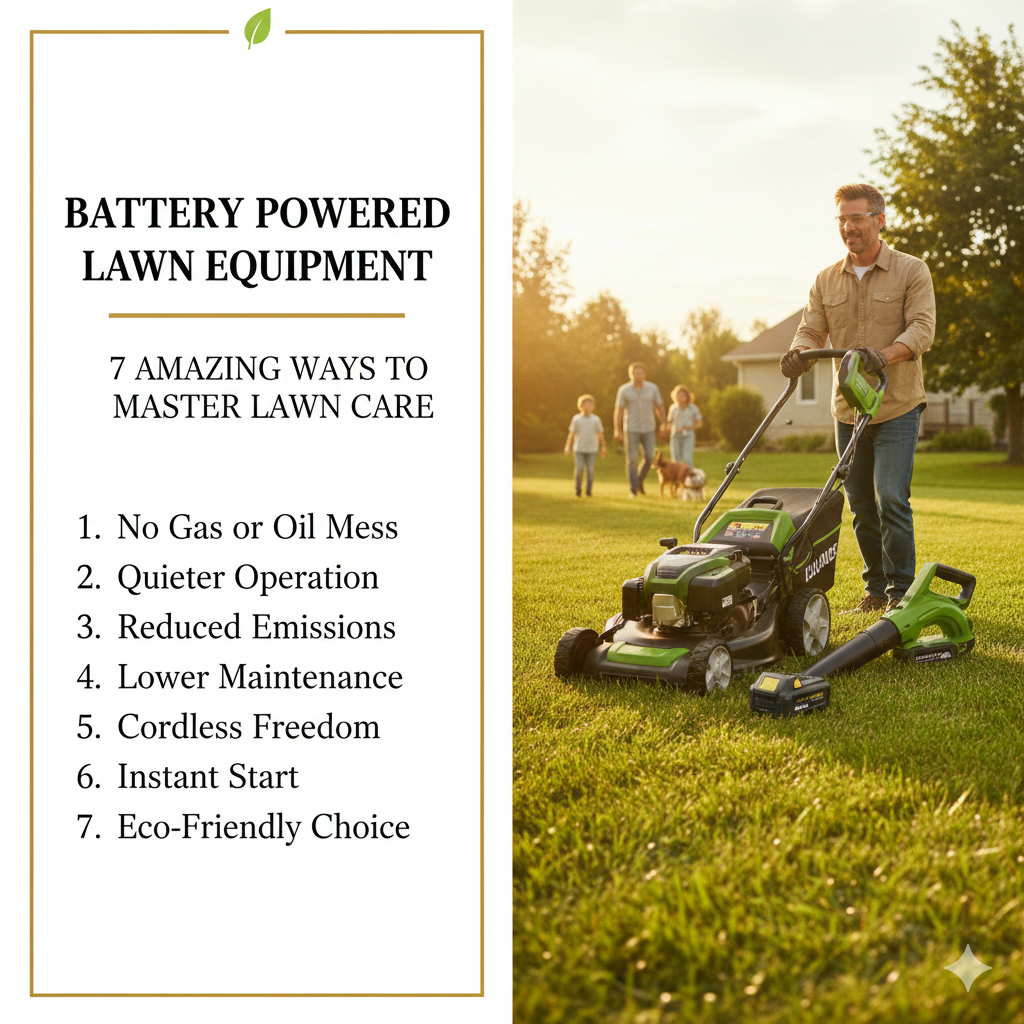
Battery powered lawn equipment is rapidly changing how homeowners and landscapers care for their lawns, offering a cleaner, quieter, and often more convenient alternative to traditional gas models.
Key Takeaways
- Battery powered lawn equipment now outsells gas for most new residential tools due to improved performance and stricter emission rules.
- The biggest pain points switching to battery are runtime limits, high battery replacement cost, and platform lock-in. Maintenance is easier but not free.
- Environmental impact during use is much lower with battery tools, but battery recycling and total cost of ownership remain unsolved challenges.
- What Is Battery Powered Lawn Equipment (and Why Switch)?
- How to Switch: Step-By-Step, From Shopping to First Cut
- Advanced Analysis & Common Pitfalls
- Conclusion
- FAQ
What Is Battery Powered Lawn Equipment (and Why Switch)?
Battery powered lawn equipment includes mowers, trimmers, blowers, chainsaws, and other yard tools that run on rechargeable lithium-ion batteries instead of gas. In 2024, the global market for cordless garden equipment reached over $17 billion and is growing fast, with battery models gaining ground as gas demand stays flat or shrinks.
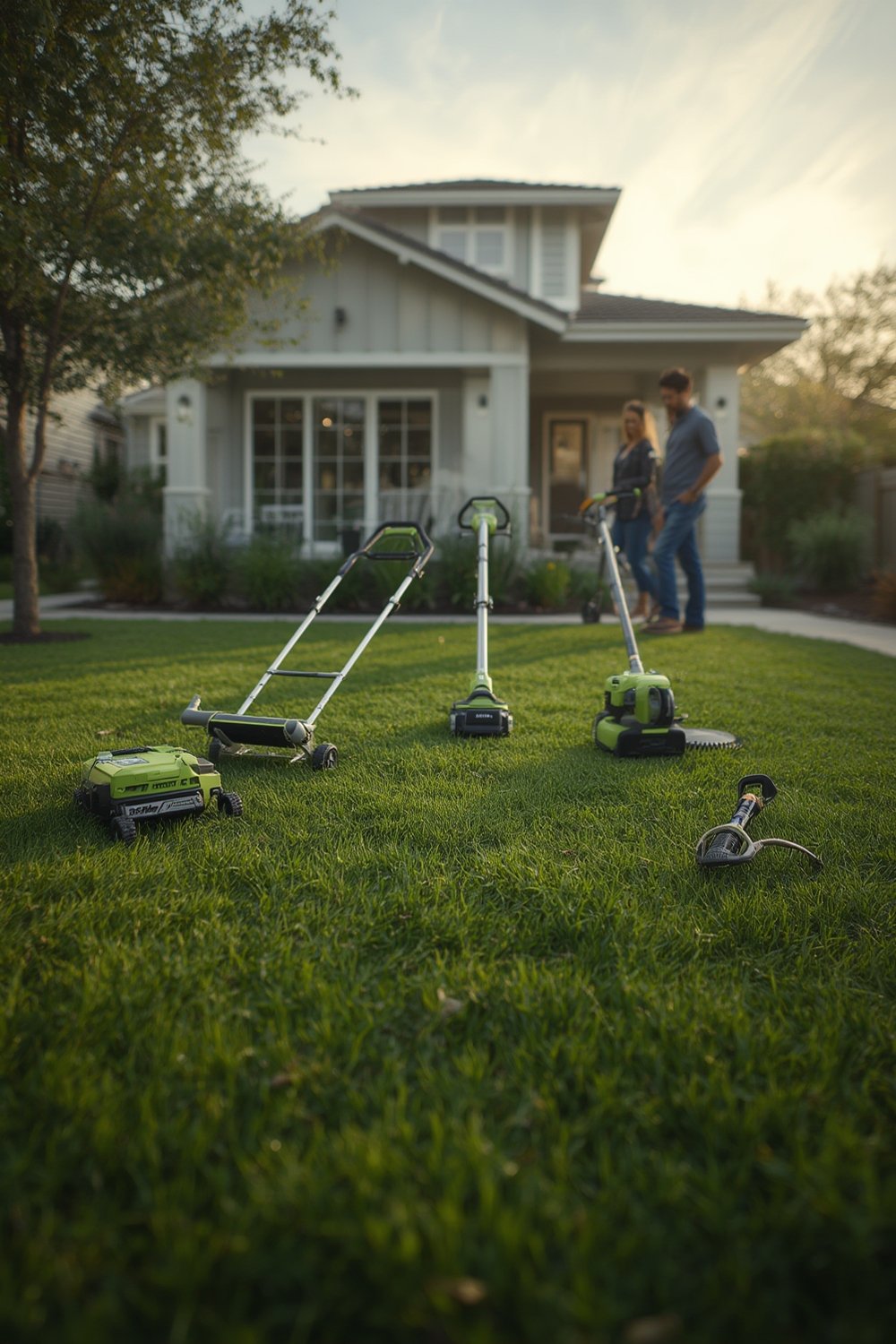
The switch is being driven by tougher emission standards, consumer demand for less noise and maintenance, and steady advances in battery tech. 44% of buyers intend to go battery on their next purchase, a figure that keeps rising each year.
For urban and suburban homeowners, today’s cordless tools offer enough power for most tasks, dramatic noise reduction, and fewer recurring expenses like gas and spark plugs. For commercial users and big properties, the transition is slower, mainly due to battery runtime and upfront costs.
Battery equipment also creates flexibility for eco-friendly yard trends, such as native pollinator planting, lawn-to-meadow conversions, and DIY chaos gardening with less noise and emissions.
How to Switch: Step-By-Step, From Shopping to First Cut
- Assess your property and needs. List the size of your lawn, the kinds of tools you use each month (mower, blower, trimmer, etc.), and note if your work is mainly weekly maintenance or heavier tasks like clearing wet debris or heavy overgrowth.
- Research battery ecosystems. Each brand (like Toro, Bosch, or Ryobi) uses its own battery design. Consider which sets offer a “family” of tools so you can swap batteries and avoid buying extras.
Look for voltage families (typically 20V, 36V, 40V, 80V) matched to your expected workload. - Decide kit vs. bare tool. For first-time buyers, a starter kit (tool, battery, and charger) is best. Later, you can expand with “bare tool” purchases in the same system for savings.
- Calculate total cost. Add up all components: the tool, batteries (you likely need two for uninterrupted work), and replacement costs in 3-5 years. Compare with ongoing fuel, oil, and service for gas equivalents.
- Buy from reputable brands. Stick to established makers like Toro, Bosch, Briggs & Stratton, John Deere, or others with strong support and proven reliability. Check for warranty details and parts supply.
- Start with core tools (mower, trimmer, blower). Most users do not need to replace everything at once. Begin with the tool you use most often, test battery life, and expand slowly as your confidence and needs grow.
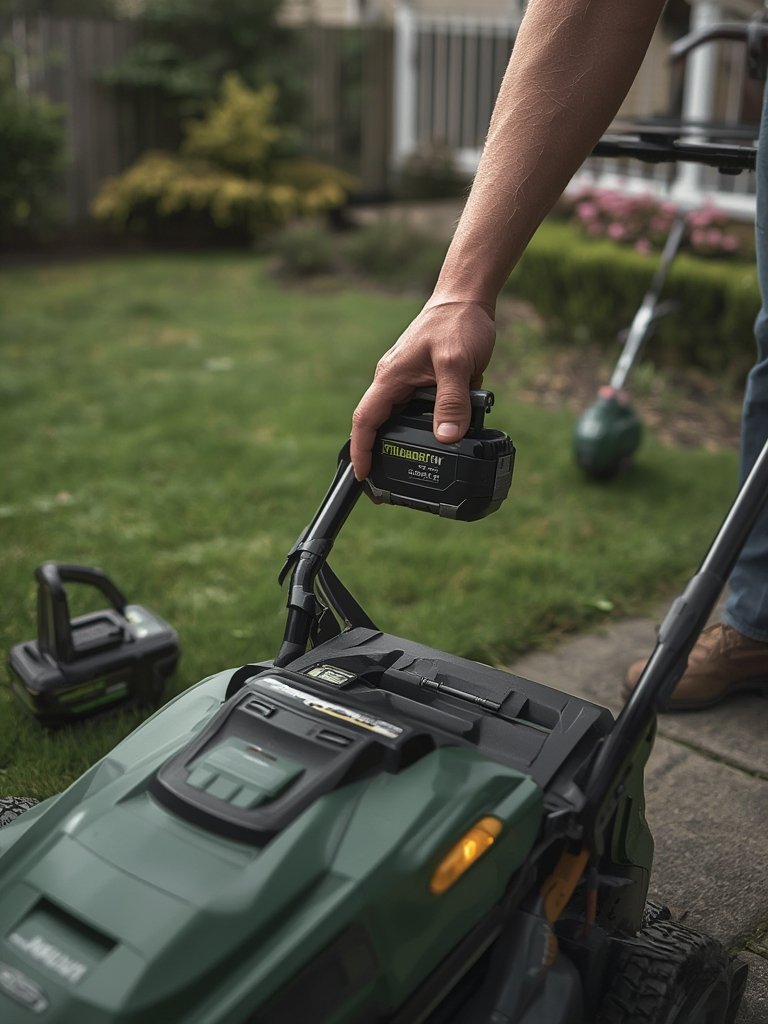
- Charge properly, store carefully. Follow the manual. Store batteries at moderate temps and partial charge in winter for best lifespan. Invest in a second battery if downtime is a concern.
- Regular maintenance still matters. Clean debris, inspect blades/lines, and follow battery recycling best practices. Even with simple tools, neglect can shorten lifespan or void the warranty.
If you’re also curious about integrating a fully robotic mowing solution, see our guide to robotic lawn mower installation for setup details and market trends.
Advanced Analysis & Common Pitfalls
Switching to battery powered lawn equipment eliminates many gas headaches, but new users often underestimate several critical challenges:
Common Pitfalls When Switching
- Runtime limits and job interruption. If you have over 7,000+ square feet of lawn or take multiple hours per mow, most kits require battery swaps (or buying larger packs, which add cost).
- High battery replacement cost. Batteries wear over 3-5 years. At $100-$200 per pack, this is a major part of true ownership cost.
- Charging downtime. Even fast chargers typically require 30-90 minutes. With only one battery, you’ll have forced breaks mid-job.
- Platform lock-in and lack of cross-brand compatibility. Once you choose a brand ecosystem, future tool purchases are locked to that battery design.
- Performance for heavy-duty tasks. For thick weeds, wet leaves, or ambitious homeowner projects, some cordless tools still lag top gas models in sustained torque or capacity.
- Battery recycling and disposal remain inconvenient. Many localities limit where tool batteries are accepted for recycling, and improper disposal harms the environment.
| Factor | Battery Powered | Gas Powered |
|---|---|---|
| Upfront Cost | Tends higher (must buy battery & charger; more for spare battery) | Lower for base unit |
| Ongoing Cost | Very low (no fuel, oil, tuneups; battery replacement every 3-5 years) | Fuel, oil, spark plugs, carburetor service required |
| Runtime per session | 30-60 minutes per charge (varies by tool/pack) | Unlimited; quick refill |
| Power for tough jobs | Much improved; best for residential/light pro | Maximum for large or heavy-duty projects |
| Noise & Emissions | Very low during use; “emission-free” at point of use | Loud, emits local pollutants |
| Maintenance | Easy—mostly keep battery healthy | More frequent, more time-consuming |
| Platform flexibility | Locked to chosen battery brand/ecosystem | Aftermarket parts, lots of general cross compatibility |
| Disposal/Recycling | Batteries must be recycled—options limited/complex | Standard waste/fuel chain |
The environmental story is not all rosy: while batteries mean lower emissions during use (source), lithium and cobalt mining plus battery recycling lag far behind similar auto markets. Most DIYers still overlook these factors. Top competitor articles rarely break down upstream mining impact, nor do they give a full total-cost-of-ownership projection including battery replacement—essential for smart buyers.
Want to rethink your approach entirely? Explore lawn to meadow conversion strategies to reduce mowing, emissions, and water use, or dive into chaos gardening for a wilder, low-maintenance yard.

Conclusion
Battery powered lawn equipment now offers strong performance for most residential users, with real advantages in noise, maintenance, and environmental quality. However, the switch is not “set and forget”—be realistic about runtime limits, battery cost, and platform lock-in. Spare batteries and smart purchasing will minimize frustration, and proper recycling should be part of your routine.
If you’re ready to upgrade or electrify your yard routine, research your options and compare true costs over the long term. Battery powered lawn equipment is the future—and getting started now puts you ahead of the curve for a cleaner, quieter, more sustainable lawn.
Want to take your yard tech even further? See our guide on home EV charger installation to electrify your whole home for the next generation.
FAQ
Is battery powered lawn equipment actually strong enough for thick or wet grass?
For most standard residential yards, battery powered lawn equipment is strong enough for regular mowing and trimming. Higher-voltage tools (40V or 80V) in the battery powered lawn equipment category can handle thick grass, but very tall or wet overgrowth may still challenge battery powered lawn equipment. For tough jobs, keep a second fully charged battery ready, or consider a gas model if battery powered lawn equipment is only used occasionally.
How long do batteries for lawn equipment typically last?
Most lithium-ion batteries used in battery powered lawn equipment are rated for 500–1,000 charge cycles, translating to about 3–5 years of normal use. Over time, battery powered lawn equipment will see gradual declines in runtime and peak performance. Extreme heat or cold can dramatically shorten the lifespan of battery powered lawn equipment batteries.
Are replacement batteries expensive?
Replacement batteries for battery powered lawn equipment typically cost $100–$200 each, sometimes more for high-capacity packs. When budgeting for battery powered lawn equipment, factor in needing a new battery every 3 to 5 years if you use your tools frequently.
What should I do with old or dead lithium batteries?
Never throw batteries from battery powered lawn equipment in the trash. Take them to a certified recycling center, a local hazardous waste event, or an approved retailer drop-off. Proper disposal is essential for anyone using battery powered lawn equipment.
Can I use batteries from one brand’s lawn tool in another’s?
No. Battery systems for battery powered lawn equipment are brand-specific, with different shapes, voltages, and connections. To maximize convenience and savings, plan to stay within one battery powered lawn equipment brand ecosystem over the long term.