


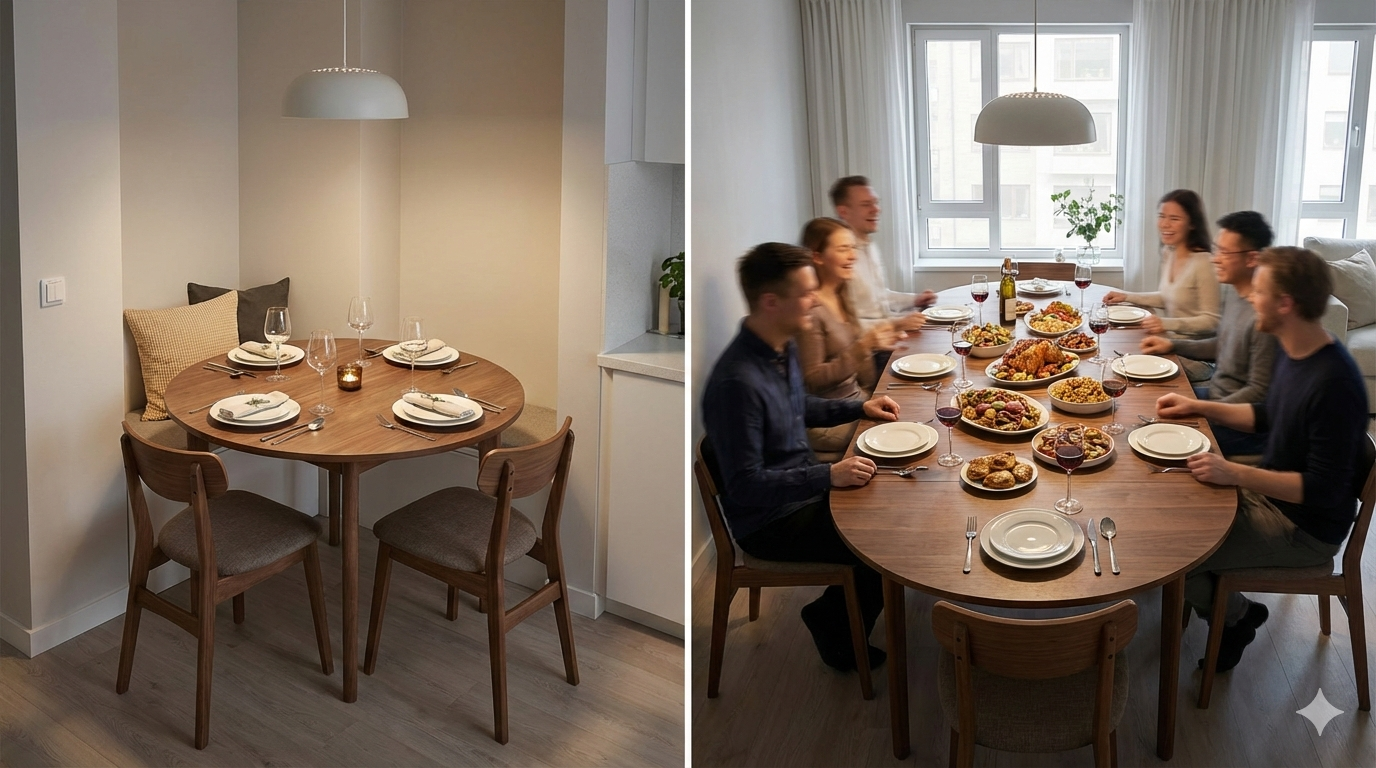
Extendable dining table solutions are transforming the way people use limited space in modern homes, making it possible to host gatherings without sacrificing comfort or style.
Key Takeaways
- Extendable dining tables offer flexible seating and efficient use of space, ideal for small apartments or multipurpose rooms.
- The global market for extendable tables continues to grow, especially among urban dwellers seeking multifunctional furniture.
- Understanding extension mechanisms, dimensions, and price points is crucial for making a smart, durable investment.
- What Is an Extendable Dining Table and Why Choose One?
- How to Choose and Set Up an Extendable Dining Table (Step-by-Step Guide)
- Advanced Analysis & Common Pitfalls
- Conclusion
- FAQ
What Is an Extendable Dining Table and Why Choose One?
An extendable dining table is designed to expand or contract, providing adaptable seating for different occasions. Whether you live in a compact city apartment or want to maximize the flexibility of your dining area, these tables are engineered to adjust to your needs. The global market reached an impressive USD 10.7 billion in 2024, thanks to steady demand for furniture that attaches seamlessly to modern, space-saving lifestyles (source). Rapid urbanization, especially in Asia Pacific (over 43% market share in 2024), continues to fuel popularity, while technology like 3D tools is making online shopping for these pieces even easier (source).
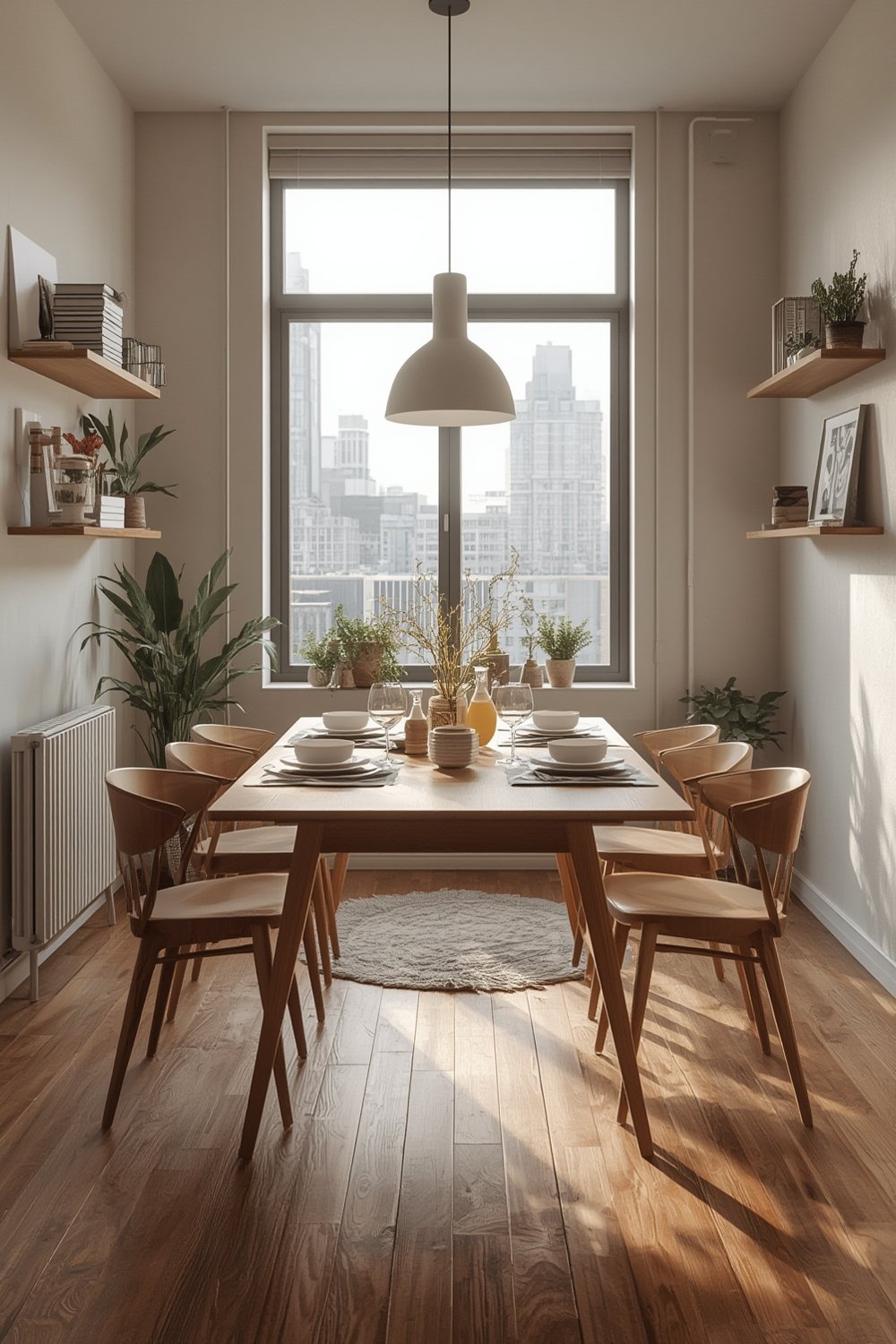
Extendable tables are especially valuable where living spaces are shrinking and multipurpose rooms are the norm. Models like those with butterfly leaf, drop leaf, or removable leaf mechanisms make it possible to host dinner for six or suddenly accommodate ten, all while maintaining a minimal everyday footprint.
For homes following adaptable interior trends, these tables align perfectly with modular living room concepts (customizable sectional couch) and multi-use spaces, meeting demands for flexibility and sustainability. Transitional styles, such as Japandi dining tables and reclaimed wood furniture, are also seeing increased popularity.
How to Choose and Set Up an Extendable Dining Table (Step-by-Step Guide)
-
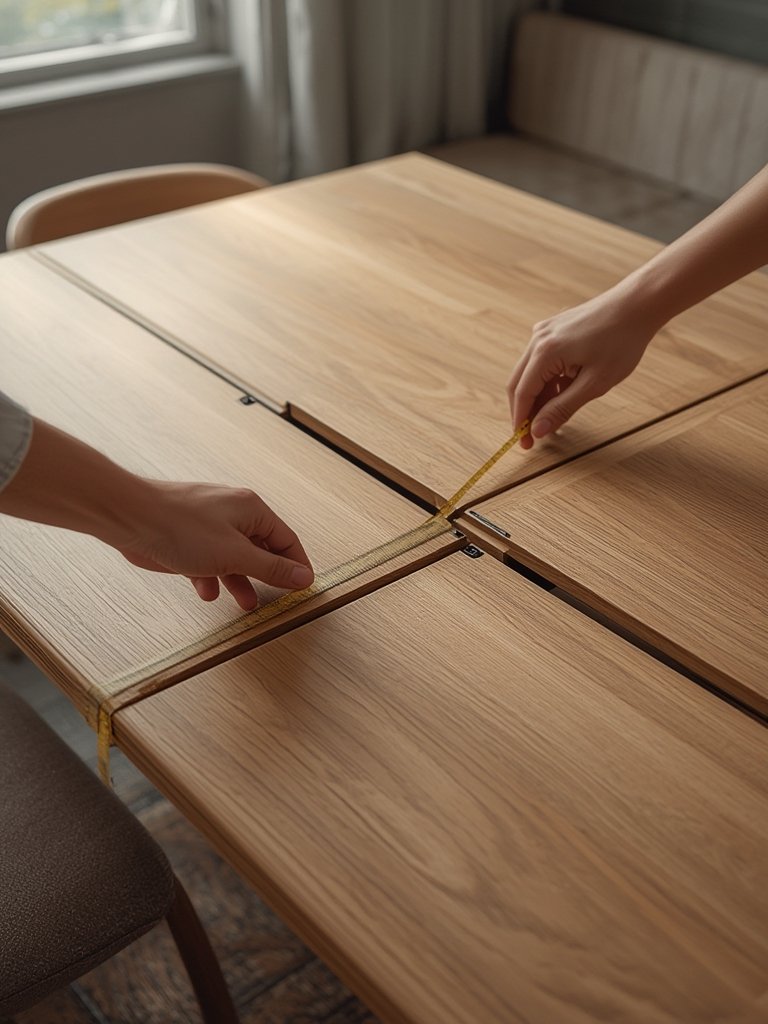
Measure Your Space Accurately:
- Measure both the regular and fully extended length and width.
- Consider the minimum and maximum seating needed; common ranges are 4-10 people.
-
Assess Extension Mechanisms:
- Consider butterfly leaf, drop leaf, and removable panels. Each has pros and cons for durability and ease of use.
- Butterfly leaf tables allow quick adjustment and often feature self-storing leaves, like the Diamante table.
-
Pick Materials That Match Your Lifestyle:
- Solid wood models (oak, walnut, teak) offer the best longevity but at higher price points (often $150-186+ USD).
- Laminate and MDF are budget friendly ($25-50 USD) but less durable for daily, repeated extensions.
-
Compare Typical Price Ranges:
- Bargain designs start at around $25 USD, while premium sets with six or more pieces may reach $500+ USD.
- Features like self-storing leaves, high-gloss finish, or additional storage raise the cost.
-
Set Up and Inspect the Mechanism:
- Open and close the table several times to check the smoothness of the extension.
- Look for visible alignment issues, squeaks, or instability—return or exchange promptly if found.
-
Style with Functional Seating:
- Choose stackable or bench seating to further maximize flexibility.
- Pair with multi-use furniture, such as a multifunctional storage ottoman or curved bouclé sofa.
-
Maintain Regularly:
- Keep mechanisms clean and lubricated (if recommended by manufacturer) to prevent sticking or misalignment.
- Check for signs of wear, especially on moving parts or locking hinges.
For those interested in the intersection of furniture and technology, many modern retailers now offer 3D augmented reality tools to visualize the table in your space before purchase (source). This can significantly reduce the risk of disappointment and the hassle of returns.
Advanced Analysis & Common Pitfalls
The extendable dining table market has grown on the strength of versatility and style, but not every model lives up to the hype. Understanding potential downsides is key before you buy.
Common Pitfalls to Avoid
- Compromised Stability When Extended: Cheaper mechanisms or lighter materials can cause wobbling and misalignment.
- Wear on Mechanisms: Frequent expansion and contraction accelerate wear on hinges, glides, and locks, which may not be covered by standard warranties.
- Mismatch in Aesthetic: Some extensions don’t match the original finish or grain, which can look out of place during use.
- Storage Issues: Non self-storing leaves are easy to misplace or damage. This is commonly reported in owner discussions, though negative reviews are rarely aggregated.
- False Capacity Claims: Some manufacturers overestimate true seating capacity, particularly for oval or narrow rectangular tables. Always check real dimensions and allow 24 inches per person for comfort.
Extension Mechanisms Compared
| Extension Type | Durability | Ease of Use | Reliability | Storage |
|---|---|---|---|---|
| Butterfly Leaf | High (when built well) | Very easy | Usually excellent | Self-storing |
| Drop Leaf | Moderate | Quick but less sturdy | Occasional hinge loosening | N/A, folds under |
| Removable Panels | Varies (dependent on material and fit) | Moderate setup time | Dependent on handling | Separate storage required |
Technical Specs to Prioritize
- Minimum and Maximum Length: Example: Pechino extends from 74 to 118 inches, seating 6-10 (source).
- Weight Limit: Always check the maximum table weight and seat weight ratings, especially for multipurpose spaces or heavy tableware.
- Mechanism Strength: Seek user video reviews or in-store demos if possible to judge construction strength.
- Warranty and Return Policies: Current market research does not provide consistent data, so clarify returns and warranties with each retailer.

For those assembling multifunctional setups, consider pairing your table with adaptable seating (like velvet curved dining chairs) or integrating with convertible furniture such as a Murphy bed to create a seamless living/dining experience.
Conclusion
Extendable dining tables are an actionable solution for anyone balancing space limitations with the need for flexibility. By understanding extension mechanisms, measuring accurately, and investing in materials that last, you can avoid common pitfalls and make your dining space truly work for you. Ready to start your journey toward a more functional home? Explore your options, measure your space, and make sure your next extendable dining table meets your evolving needs.
For more ideas on maximizing space, see our guides on modular living room furniture and multifunctional ottomans.
FAQ
How much space should I leave around an extendable dining table?
Ideally, leave at least 36 inches of clearance on all sides when the table is fully extended so guests can move chairs comfortably.
Which extension mechanism is best for daily use?
Butterfly leaf tables are typically recommended due to their ease of use and self-storing functionality, making daily operation simpler and reducing the risk of losing parts.
Are there budget-friendly extendable dining tables that still last?
Yes, but longevity often depends on the quality of materials and hardware. Look for solid wood or metal hardware even at lower price points for better durability.
What are the most common mistakes buyers make?
The most frequent mistake is not measuring the maximum extension in their space, resulting in cramped movement or blocked walkways. Also, buyers often overlook the need for sturdy mechanisms or clear return policies.
Can extendable tables suit modern or minimalist design?
Absolutely. Many modern designs integrate minimalist aesthetics, such as high-gloss or matte finishes, clean silhouettes, and soft curves, making them suitable for a wide range of interiors.