


Robotic lawn mower installation is rapidly becoming a popular choice for homeowners and professionals who want a perfectly maintained lawn with less manual work. Choosing the right installation method directly affects your results, costs, and ongoing maintenance.
Key Takeaways
- Robotic lawn mower installation is realistic for most properties, but setup differs widely between boundary wire and wire-free models.
- Boundary-wire guidance remains the simplest and most supported technology in 2024, though wire-free GPS systems are growing fast.
- Common pitfalls include poor initial planning, wire breaks, GPS drift, and lack of mower calibration to specific lawn features.
The Core Concept
The key to robotic lawn mower installation is matching the technology to your property and your expectations for maintenance. There are two primary types of navigation: boundary-wire and wire-free (GPS, vision, or LiDAR-based). In 2024, boundary-wire systems dominate with 65.4% market share, offering proven reliability, while wire-free models are rapidly gaining popularity thanks to easy setup [Market source].
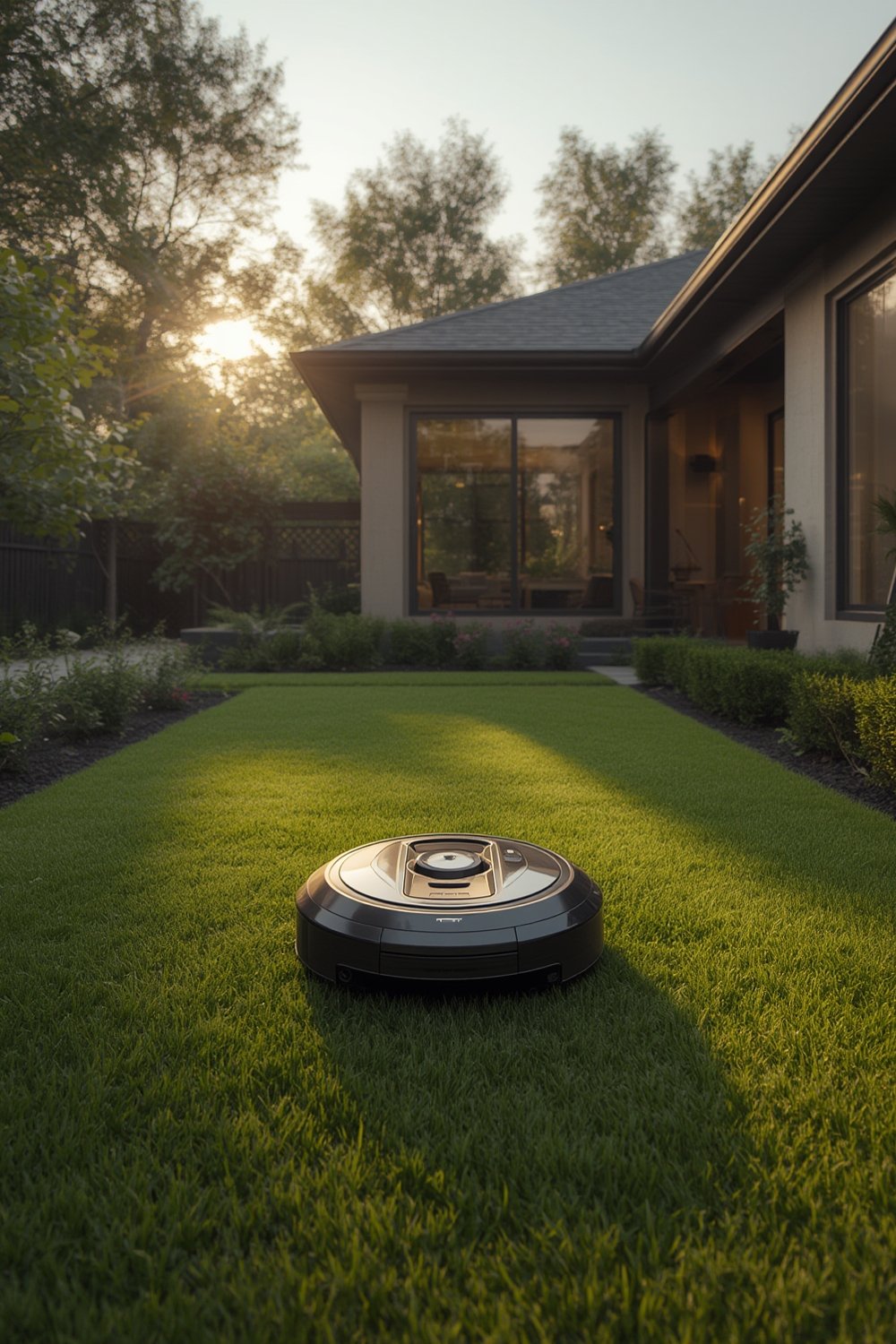
Boundary Wire systems require placing a low-voltage guide wire around your lawn. This wire keeps the mower inside set boundaries and helps it navigate complex gardens. In contrast, wire-free systems use GPS or sensors to map territory, making setup potentially faster but also introducing new challenges such as connectivity and accuracy issues. Most residential users (over 63.5% of installations in 2024) opt for boundary-wire setups due to lower initial cost and broad compatibility with medium-sized lawns [Research].
As the market grows—ranging from USD 2 billion to USD 8.5 billion depending on methodology—getting your installation right is more important than ever. Experienced users know setup impacts mowing quality, savings, and long-term maintenance needs. This article shows you how to do it effectively and avoid common mistakes.
Step-by-Step Guide
A successful robotic lawn mower installation starts with knowing your property, reading the manual, and selecting the right model. Manufacturers recommend professional installation for complex lawns or advanced wire-free models, but most homeowners can tackle boundary-wire installation over a weekend.
- Choose Your Navigation Type
– Boundary-wire systems are reliable, affordable, and repairable. Ideal for traditional gardens.
– Wire-free models (GPS, LiDAR, or camera-based) offer quicker setup on simple, wide-open lawns but may require WiFi, Bluetooth, or strong GPS signal. - Measure and Plan
Map your lawn, designate no-go areas, and decide on the placement for the charging station (should be near a power outlet and on level ground). - Install the Charging Station
Place the dock on flat grass, connect it to power, and test the location with the mower before fixing it into the ground. - Lay the Boundary Wire (if required)
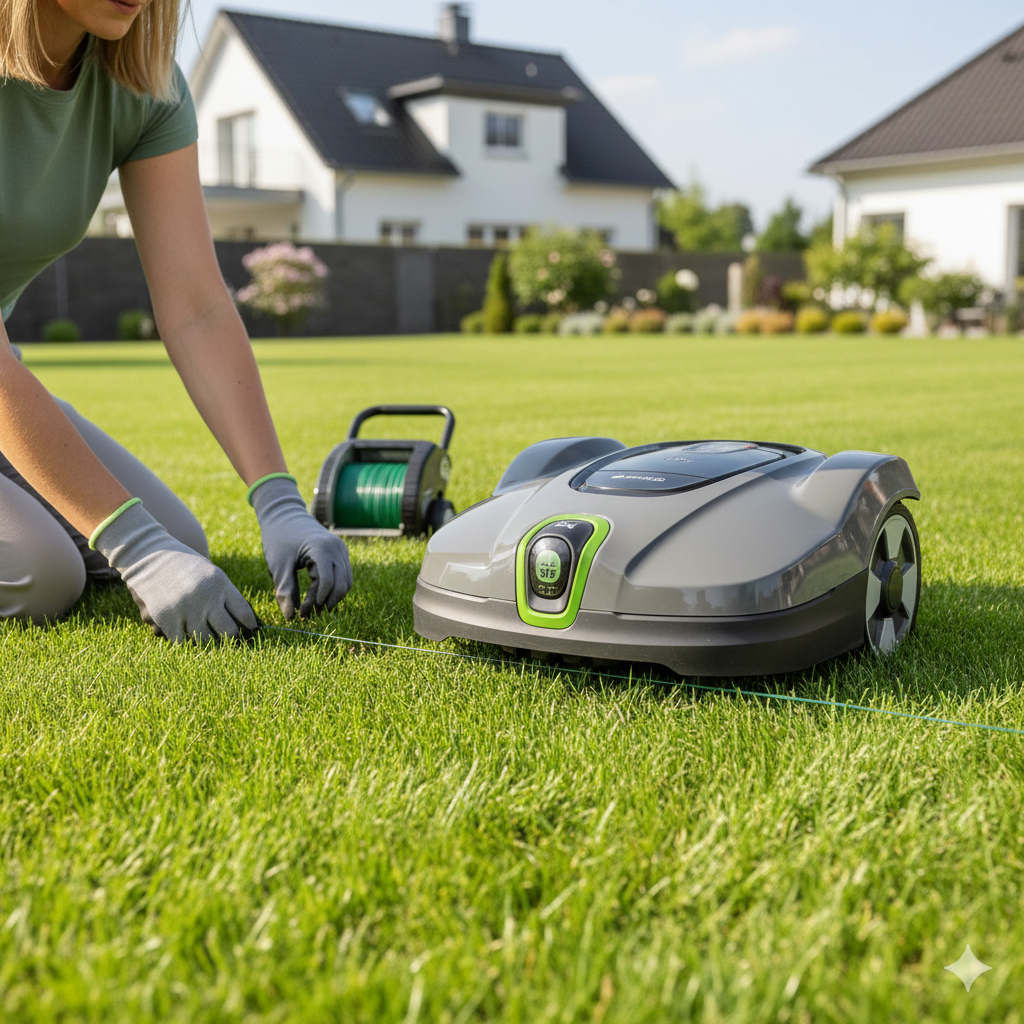
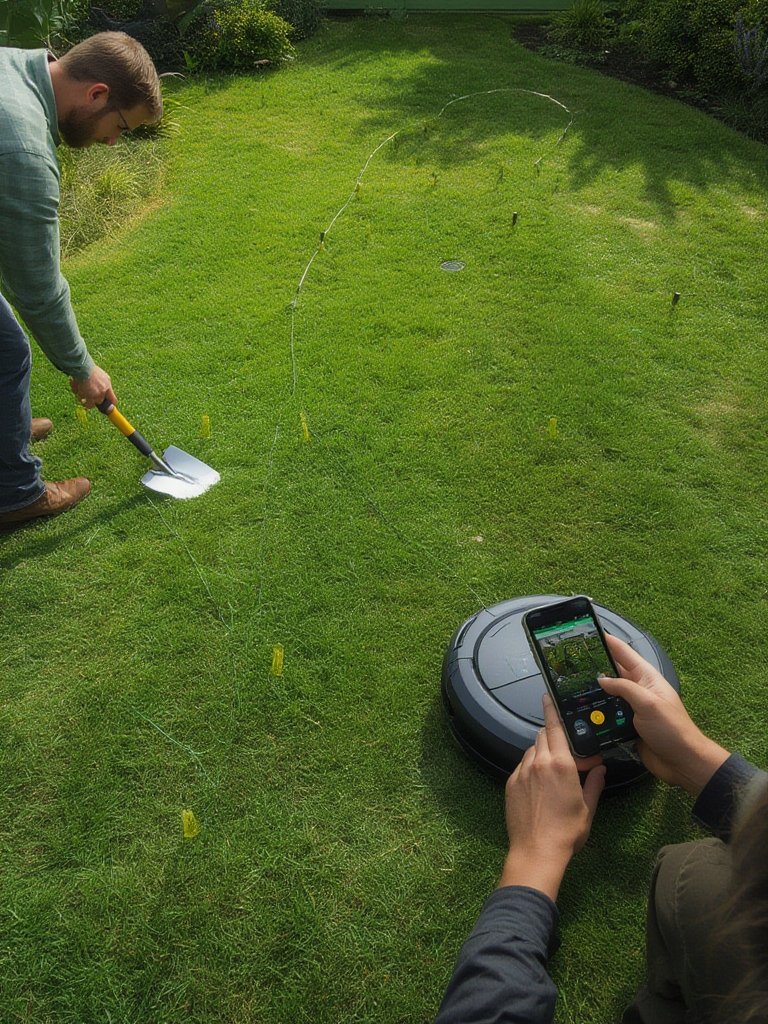
For boundary-wire models, stake the cable with installer pegs about every 3 feet, making sure to leave slack at turns and corners.
– Keep wire clear of flower beds and hard edges by at least 10–12 inches.
– For islands (trees, garden beds), loop the wire around and rejoin the main loop as per your mower’s manual. - Connect and Test
Finish by connecting the wire ends to the charging station and following your brand’s setup wizard. Run a first test mow and walk the boundaries to check for missed spots or navigation issues. - Calibrate and Adjust
For GPS models, carefully follow the mapping process, setting mowing areas, drop zones, and exclusion zones in the app. - Final Checks
Watch the mower for a full cycle. Look for repeated stops, wire breaks, or areas the mower avoids. Address issues before relying on automated mowing.
For comprehensive protection, consider connecting your mower to a smart home security system and routinely check for firmware updates. If you are planning other high-tech upgrades, see our guide on residential EV charging station setup for tips on future-proofing your home’s power needs.
Wall mounted EV charger solutions also influence outdoor planning—keep your robotic mower cable routes clear of electrical upgrades for safer, easier maintenance.
Remember that most robotic mowers are designed for medium lawns (501–2,000 m²), which accounts for 43.2% of global installations [Market Report]. If your property is larger, plan on segmenting into multiple zones or upgrading to a commercial mower model.
Advanced Analysis & Common Pitfalls
Robotic lawn mower installation isn’t always seamless. Despite robust market growth and increasing adoption seen in Asia-Pacific and North America, real-world data reveals several issues new users may encounter. Here’s a breakdown of what can go wrong and how the two main system types compare.
| Factor | Boundary-wire System | Wire-free (GPS/LiDAR) System |
|---|---|---|
| Setup Time | 3–6 hours (medium lawn), physical labor, lay and peg wire | 1–2 hours (mapping and app setup), minimal digging |
| Common Problems | Wire breaks, pets digging up wire, misaligned loops, power loss | GPS drift, weak signal under trees, app sync errors, more expensive repairs |
| Flexibility | Changing layout means lifting/re-laying wire | Edit zones quickly in app, great for seasonal changes |
| Maintenance Costs | Low (replace wire/button caps), DIY friendly | Higher (GPS/LiDAR module replacement), requires calibration |
| Lawn Complexity Suitability | Good for complex/obstructed lawns | Best for open, simple spaces; struggles with dense landscaping |
| Initial Cost | Lower ($600–$2,500 in 2025, based on size and features) | Higher ($1,500–$5,000+ in 2025, plus possible installation fees) |
| Market Share (2024) | 65.4% | Under 35%, but growing |
Common pitfalls include:
- Underestimating the prep time or physical effort needed for wire installation—it’s real work, especially for larger lawns.
- Not planning for flower beds, play equipment, or sloped terrain—boundary wires need careful routing to prevent damage and ensure all areas are mowed.
- Assuming GPS is always perfect—tree cover, large buildings, or weak signal zones can lead to missed spots or mower loss in wire-free systems.
- Forgetting to allow enough clearance at the lawn edges (10–12 inches minimum) to avoid scalping or mower hang-ups.
- Ignoring firmware and app updates for wire-free models, leading to software bugs and missed mowing schedules.
- Improper charging station placement—if not on a level area, it can cause docking failures or repeated mower errors.
If you are also thinking about smart home improvements, wiring for both your mower and another project (like a smart EV charger installation) on the same property requires close planning for safe routes and future maintenance.
For larger or multi-zone lawns, commercial and HOA clients (growing at 17.2% CAGR worldwide) should expect even longer setup. Consider bringing in pros with experience in robotic landscaping if budget allows.
For the latest market trends, see Robotic lawn mower installation Market Analysis. Want to learn how other home tech upgrades can impact your installation plans? Check out NACS vs J1772 connector choices for your garage and garden projects.
Conclusion
Robotic lawn mower installation means more great-looking grass, but it’s crucial to select the best navigation method and plan out your setup for decades of hassle-free automation. Most 2024 users still rely on boundary wires for a reason—predictable performance and easy repairs—but wire-free systems are rapidly catching up as the technology matures. Always follow installation instructions closely, plan for electrical and landscaping upgrades, and keep up with this fast-growing industry by checking for the latest models and reviews. If you’re ready for smarter outdoor automation, don’t wait—start your robotic lawn mower installation project this season for easier weekends and better lawn care.
Want expert tips for your property? Explore our guides on smart EV charger installation, residential EV charging station setup, and future-proofing your home to stay ahead with home technology.
FAQ
How long does robotic lawn mower installation take?
For boundary-wire models, expect 3–6 hours for most medium-sized lawns. Wire-free GPS/LiDAR systems can be set up in 1–2 hours, but may require more tuning for accuracy.
Do I need a professional for robotic lawn mower installation?
Most DIY homeowners can install a boundary-wire system in a weekend. Complex, multi-zone, or commercial projects—especially with advanced wire-free models—often benefit from professional installation.
Will a robotic mower work on steep slopes or uneven lawns?
Most robotic mowers handle gentle slopes (up to 35%). Check your model’s specs for maximum gradient. For hilly or rough terrain, look for mowers rated for higher inclines and wheel traction.
Can I do Robotic lawn mower installation myself if I plan other upgrades?
Yes, but map all underground wires and conduits before starting. Consider future upgrades (like a wall mounted EV charger) to avoid overlapping infrastructure and extra digging later.
What are ongoing maintenance tasks after installation?
Regularly check the wire for breaks, clean mower blades, keep the charging station area clear, and update mower software. Replace blades and batteries as needed for best performance.