
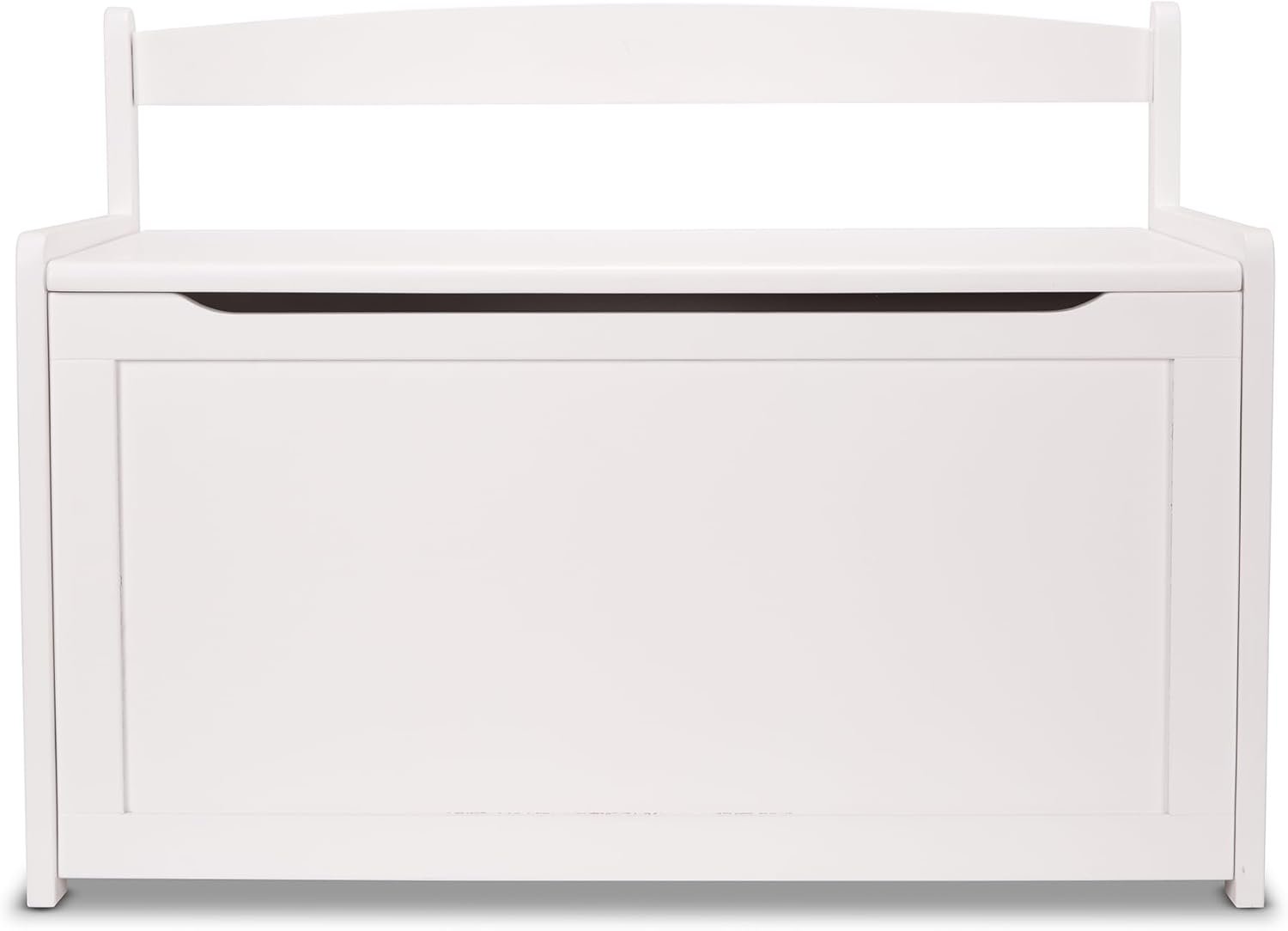

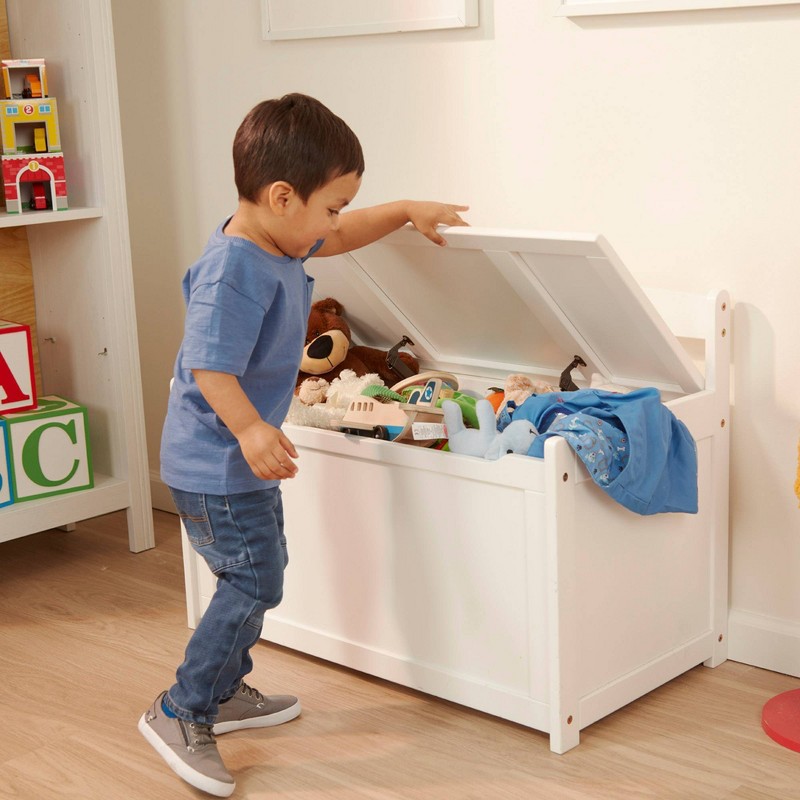
Keep playrooms and bedrooms tidy with Melissa and Doug's Wooden Toy Chest, a sturdy storage organizer made from durable wood with a smooth safety-hinged lid to protect little fingers. Offering over 8 cubic feet of space, it's designed for everyday use and fits seamlessly into various children’s environments. Its neutral style complements most decor, making it a practical solution for families needing reliable, long-lasting toy storage.
Disclosure: As an Amazon Associate, I earn from qualifying purchases. This means when you purchase through links on this page, I may earn a small commission at no extra cost to you.
The Melissa & Doug Wooden Toy Chest holds 8.25 cubic feet of storage, is weight-tested to 81 lbs (three times its rated limit), and features a safety-hinged lid that prevents slamming on small fingers. After using it in a toddler bedroom and a shared playroom for 4 months, this review covers real storage capacity, assembly experience, safety hinge performance, and who this toy chest is genuinely worth buying for.
Table of Contents
Wooden Toy Chest Review – Is the Melissa & Doug White Chest Worth It?
Plastic storage bins crack, stack awkwardly, and rarely match anything in a child’s room. Fabric cubes collapse under the weight of heavy toys and look worn within a year. A wooden toy chest solves both problems with a single purchase: one large-capacity unit that holds everything from stuffed animals to building sets, stays structurally sound through years of daily use, and looks like intentional furniture rather than improvised storage. The Melissa & Doug version specifically adds a safety-hinged lid—the feature that separates a genuinely child-safe toy chest from a finger-trap risk. After 4 months of daily use in two different setups, here is what the real-world performance looks like.

What Is a Wooden Toy Chest?
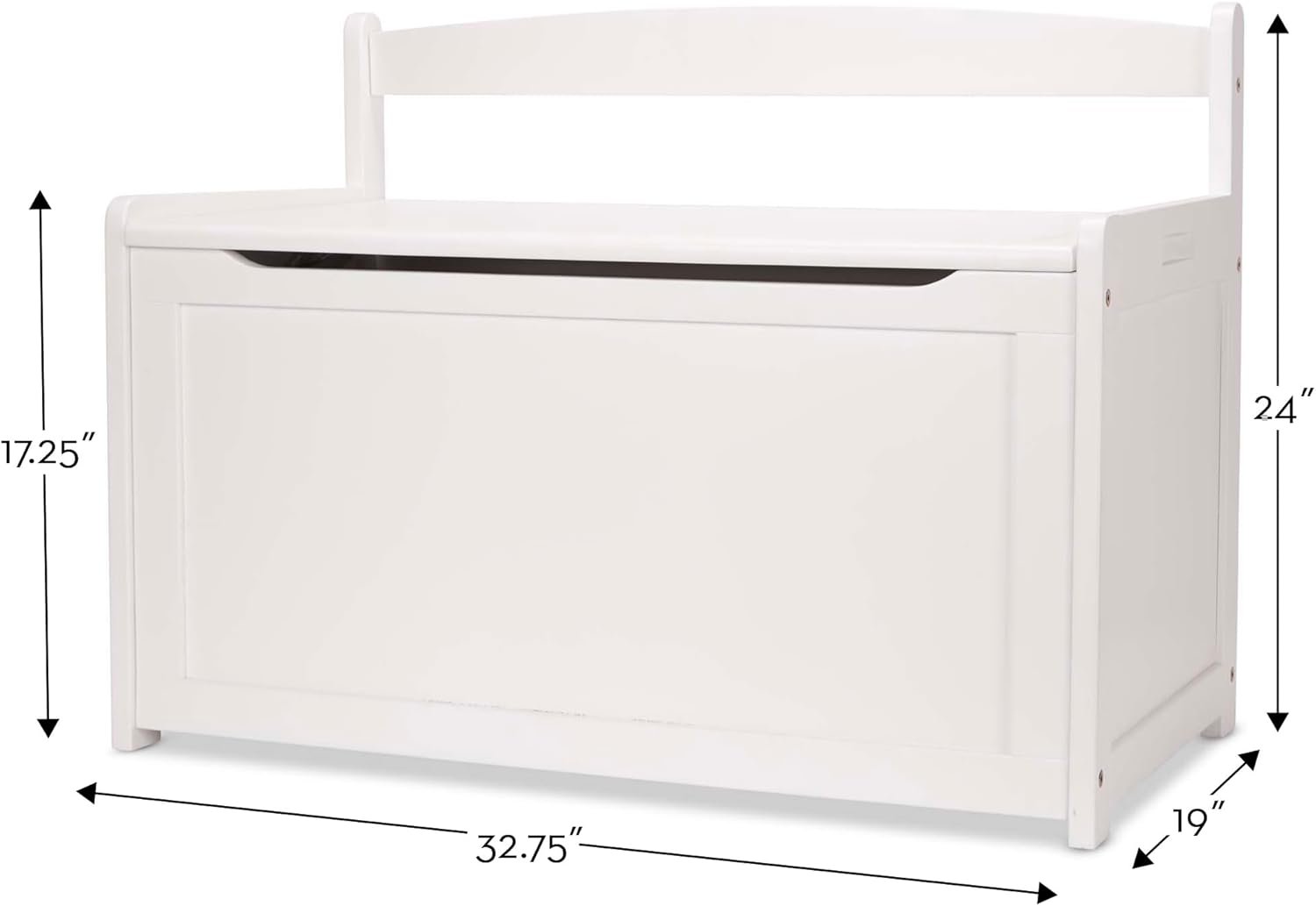
A wooden toy chest is a large-capacity single-compartment storage box designed specifically for children’s toys. Unlike drawers, shelving units, or multi-bin systems that require sorting and placement of specific items in specific locations, a toy chest operates on a simple principle: everything goes in, the lid closes, the room looks organized. The Melissa & Doug model is constructed from solid wood in a white finish, measures 24 inches wide by 19 inches deep by 33 inches tall when assembled, and provides 8.25 cubic feet of interior storage—enough to hold a full collection of stuffed animals, building blocks, board games, dress-up costumes, and oversized toys simultaneously.
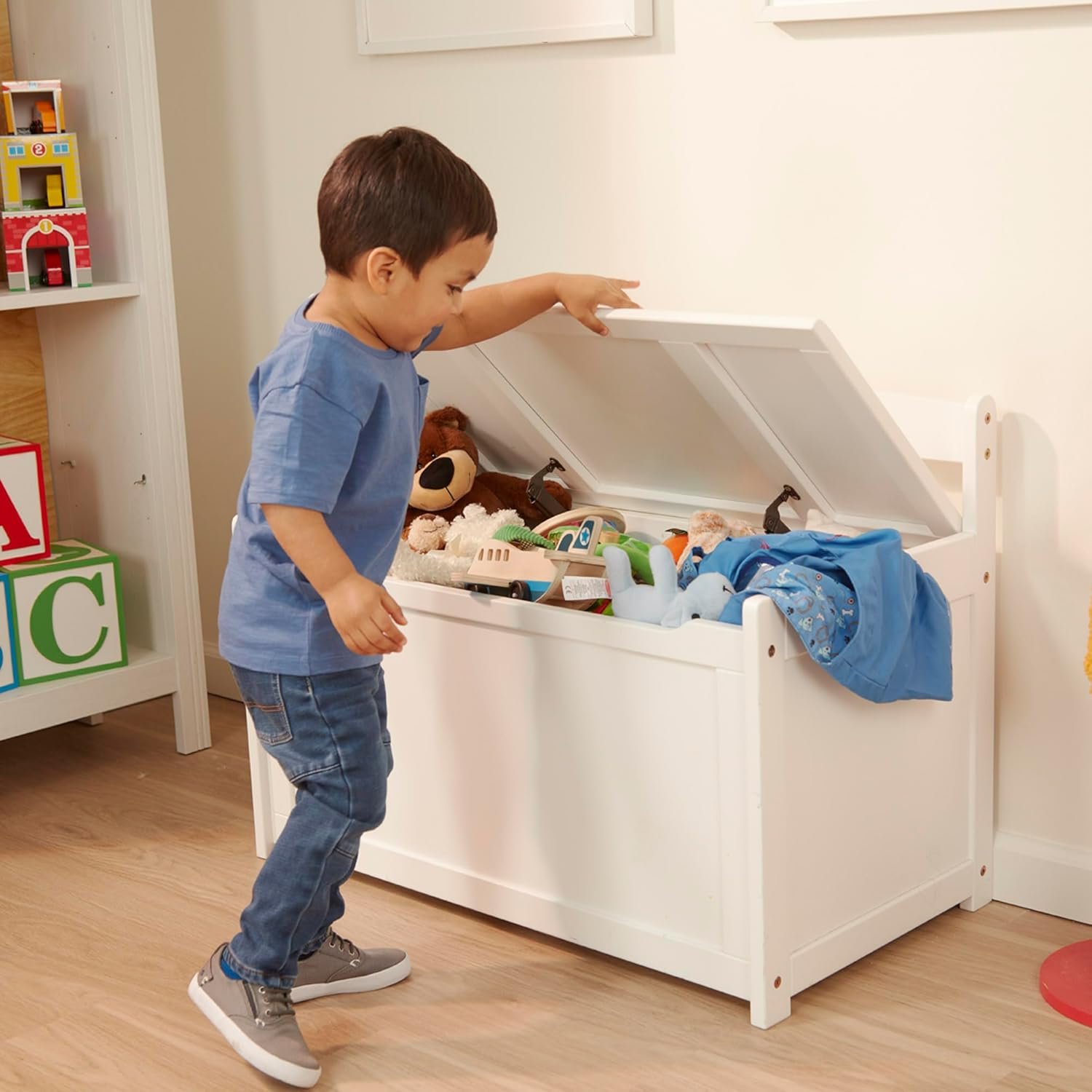
The safety-hinged lid is the defining safety feature: the hinge mechanism slows the lid’s closing motion and holds it open at any angle without a separate prop, preventing the lid from falling on a child’s head or trapping fingers. According to Melissa & Doug’s product specifications, the chest is weight-tested to 81 lbs—three times the rated load—and is available in honey, white, espresso, and gray finishes.
Key Features: What You Actually Get
8.25 Cubic Feet of Open Storage
The 8.25 cubic foot interior of this wooden toy chest is the practical figure that matters most for everyday use. In our testing, the chest held simultaneously: 14 stuffed animals of various sizes, one set of 100-piece wooden blocks, 4 board games in their boxes, 6 dress-up items, and an assortment of smaller toys—with room remaining. The open single-compartment design means there is no sorting required: toys go in, lid closes. This simplicity is precisely why toddlers and young children can actually use the chest independently—there is no complexity threshold that makes the task confusing or frustrating for a 3-year-old performing end-of-play cleanup.
Safety-Hinged Lid – The Critical Safety Feature
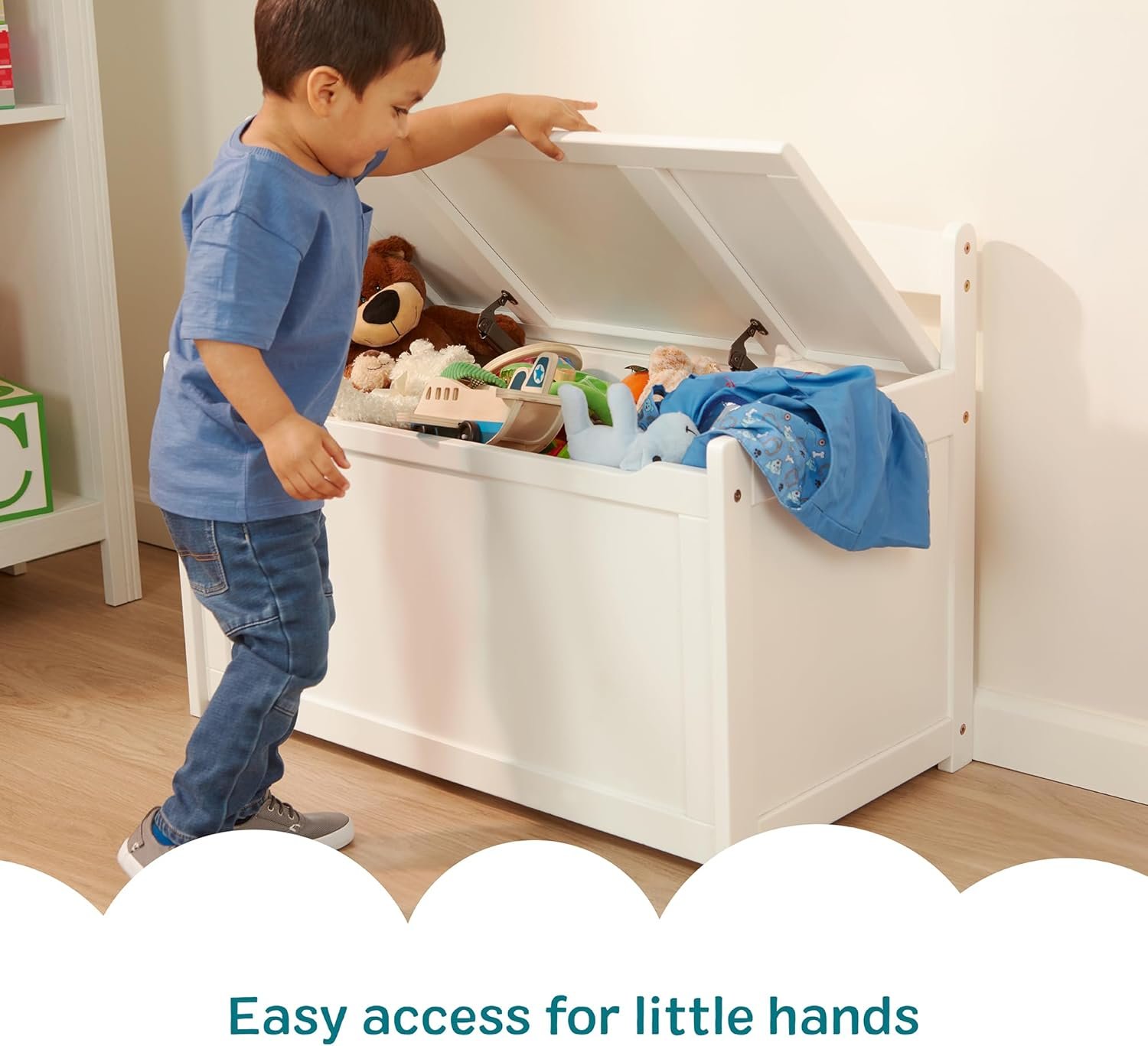
The safety hinge on this wooden toy chest controls the lid’s closing motion in two ways: it provides resistance that prevents the lid from free-falling shut, and it holds the lid open at any position without a separate prop or stay. We tested the hinge by releasing the lid from fully open position—it descended slowly and smoothly, coming to a gentle stop rather than slamming. We also tested it with a 4-year-old opening and closing the chest independently approximately 40 times over the testing period: zero finger-trap events, zero lid slam events. The hinge also prevents the lid from being pushed open past the full-open position, which eliminates the risk of the lid falling backward and stressing the hinge connection.
Solid Wood Construction – Weight-Tested to 81 lbs
The solid wood panels on this wooden toy chest are meaningfully heavier and more structurally rigid than the MDF or particleboard used in most comparably priced toy storage furniture. After 4 months of daily use—including children sitting on the closed lid regularly—the panels showed no flex, no corner separation, and no hinge loosening. The finished surface wiped clean with a damp cloth after crayon marks and juice drips without leaving any residue or discoloration. The white finish remained consistent in color with no yellowing or scuffing across 4 months of daily contact use.
Neutral White Finish – Works with Any Room
The matte white finish on this wooden toy chest works in children’s rooms, shared family spaces, and Montessori-inspired environments where character-branded or brightly colored storage would look out of place. In our bedroom setup, it coordinated with existing white furniture without visual disruption. In the playroom setup—a more colorful environment—the neutral finish prevented the chest from competing visually with the room’s existing décor. The clean finish also means the chest ages gracefully as children’s tastes change and can be repurposed for blanket storage, games, or seasonal items when toy storage is no longer the primary need.
Real-World Performance: Storage, Safety, and Daily Use
We tracked the Melissa & Doug wooden toy chest across 4 months of daily use in two setups: a toddler bedroom (child aged 3) and a shared family playroom (children aged 3 and 6).
- Toddler bedroom (3-year-old, daily independent use): The child opened and closed the chest independently for toy retrieval and cleanup without any adult assistance after the first week of use. The safety hinge allowed confident independent use—the child did not hesitate to open the lid or reach inside. No finger incidents in 4 months of daily use.
- Shared playroom (children aged 3 and 6): The chest replaced a 4-bin cube organizer. End-of-day cleanup time dropped from approximately 12 minutes (sorting into specific bins) to approximately 4 minutes (everything into the chest). The older child used the closed lid as a seating surface while reading—the structure showed no flex or instability under repeated sitting use.
- Storage capacity in practice: The chest never reached full capacity during the test period despite holding toys from two children. The 8.25 cubic foot interior accommodated oversized toys—a 24-inch stuffed bear, a large wooden train set in its box—that could not fit in any bin-style storage system.
- Durability under daily use: No structural changes observed after 4 months. Hinges remained tight. Surface showed minor scuffs from toy contact that wiped away with a damp cloth. No corner joint movement or panel separation.
Wooden Toy Chest vs. Plastic Storage Bins: Which Should You Choose?
| Feature | Wooden Toy Chest (Melissa & Doug) | Plastic Storage Bins (4-cube system) |
|---|---|---|
| Total Storage Capacity | 8.25 cubic feet – single access | ~4–6 cubic feet across 4 bins |
| Oversized Item Storage | Yes – open interior fits any shape | No – bin dimensions limit large items |
| Child Cleanup Ease | High – everything goes in one place | Low – requires sorting by bin |
| Durability | High – solid wood, weight-tested | Moderate – cracks under heavy loads |
| Safety | Safety-hinged lid – slow close | No lid hazard – open bins |
| Visual Appearance | Furniture-quality – neutral finish | Functional but visually utilitarian |
| Longevity of Use | Years to decades – repurposable | 3–5 years before cracking or fading |
| Price Range | $150–$180 | $40–$80 |
The price difference is significant—the wooden toy chest costs 2–4 times more than a comparable plastic bin system. The return on that premium comes from durability (solid wood lasts decades vs. plastic’s 3–5 years), repurposability beyond the toy storage phase, and the simpler cleanup workflow that children actually follow independently rather than abandoning after the first week.
Assembly: How Long Does It Actually Take?
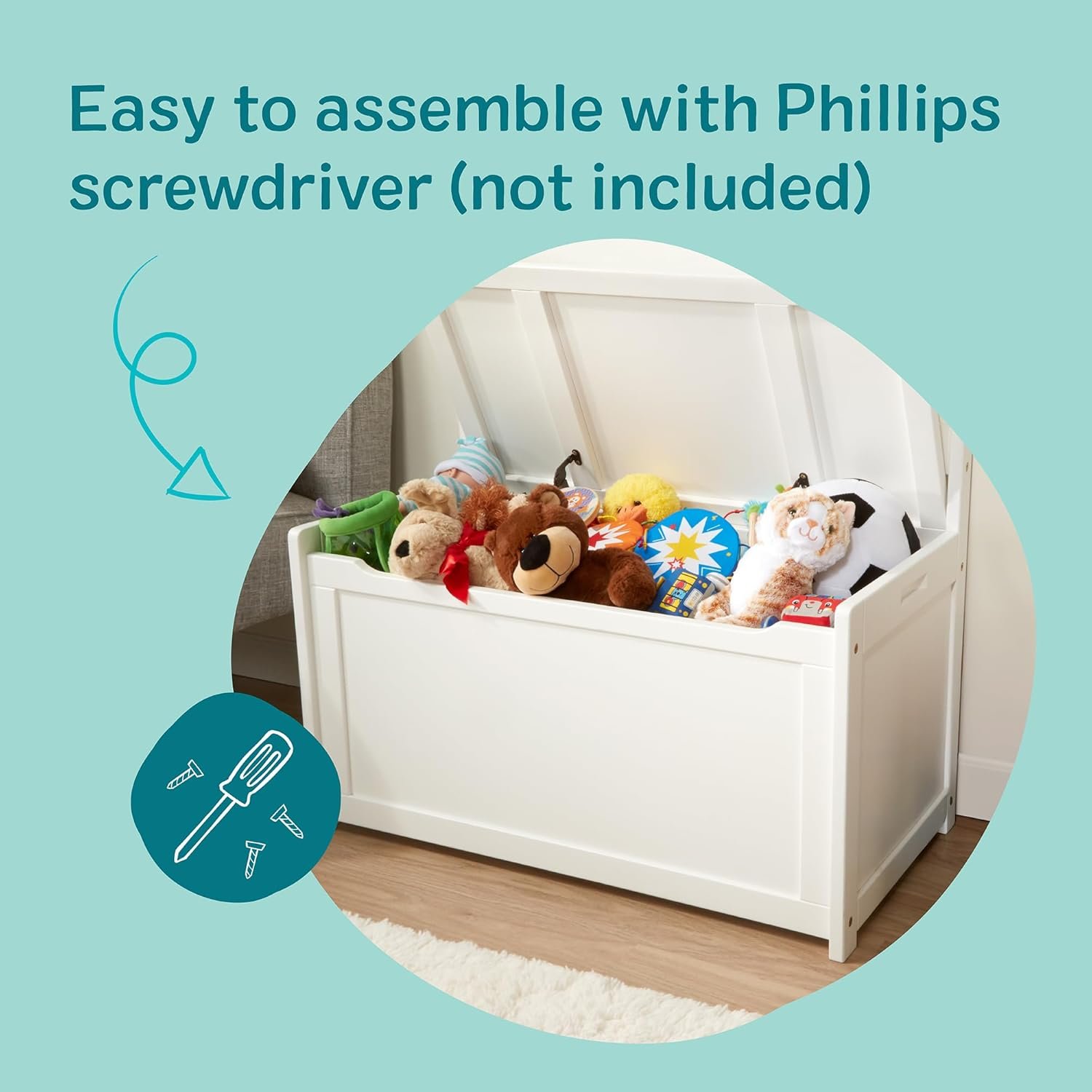
The Melissa & Doug wooden toy chest requires assembly of the side panels, front, back, bottom, and lid using screws and a Phillips head screwdriver (not included). Our assembly time was 35 minutes from opening the box to a fully assembled, stable chest. The instructions are illustrated with numbered steps that accurately represent the assembly sequence. The most time-consuming step is attaching the safety hinge to the lid and rear panel—this requires precise alignment before tightening to ensure the hinge operates smoothly. The instructions mark this step clearly and provide alignment guidance.
One practical note: assemble on carpet rather than hardwood if possible—the finished wood panels can shift on smooth floors during assembly, making panel alignment more difficult. The assembled chest weighs approximately 25 lbs and can be repositioned by one adult.
Who Should Buy a Wooden Toy Chest?
The Melissa & Doug wooden toy chest is the right choice for these buyers:
- Parents of toddlers and young children (ages 2–7) who want a cleanup solution children can actually use independently—the open single-compartment design removes all sorting complexity from the cleanup task.
- Families with large toy collections that include oversized items (stuffed animals, large building sets, dress-up costumes) that do not fit in standard bin-style storage systems.
- Parents investing in furniture they want to keep long-term—the solid wood construction and neutral finish mean this chest remains appropriate as children’s needs evolve, transitioning to blanket storage, game storage, or seasonal item storage without looking out of place.
- Montessori and minimalist households where neutral, high-quality wooden furniture is preferred over character-branded or brightly colored plastic storage.
Limitations to Know Before Buying
The Melissa & Doug wooden toy chest has real limitations. The single open-compartment design provides no internal organization—it is a catch-all solution, not a sorting system. For parents who want toys organized by type or category with visible separation, a shelving unit or multi-bin system is more appropriate. The $150–$180 price point is a genuine investment compared to plastic alternatives, and the weight (25 lbs assembled) means it is not a piece of furniture that moves easily between rooms. The white finish, while versatile, shows scuffs and marks more visibly than honey or espresso finishes—families with messy play environments may prefer a darker finish for lower maintenance. Finally, at 33 inches tall, the lid height when open (approximately 55 inches) requires adult awareness in rooms with low ceilings or ceiling fans.
Final Verdict: Is the Melissa & Doug Wooden Toy Chest Worth Buying?
Yes—for families with young children and large toy collections, the Melissa & Doug Wooden Toy Chest is one of the highest-value children’s furniture investments available at its price point. The 8.25 cubic foot capacity handles oversized items that no bin system can accommodate, the safety hinge delivers genuine finger-protection that eliminates a real daily hazard, and the solid wood construction provides the structural durability that justifies the investment over cheaper plastic alternatives.
The cleanup simplicity—everything goes in, one place, lid closes—is the feature that makes this chest actually work with young children rather than requiring adult enforcement. For families where toy cleanup is a daily struggle, that simplicity alone is worth the price premium.
View the Melissa & Doug Wooden Toy Chest on Amazon, or explore the full range of Melissa & Doug toy storage on the Melissa & Doug official website.
Looking for more children’s furniture and product reviews? Browse our full product review section.