



Fiskars 8 lb. Splitting Maul is ideal for splitting big logs thanks to its long shock-absorbing handle and forged steel blade. The comfortable grip helps manage tough jobs, but its weight and large handle are best suited for those who prefer a heavier maul for hardwood. Suited for campfires, backyard chores, or bushcraft, this tool is built for durability, though users should be mindful of its size if portability and light handling are more important than raw splitting power.
Splitting Maul delivers powerful force and control for breaking large logs and tough firewood efficiently.

Table of Contents
Splitting Maul Review – Powerful Tool for Breaking Tough Firewood
A splitting maul is one of the most effective manual tools for breaking down firewood, especially when dealing with thick, dense, or knotty logs. Designed to deliver maximum force with each swing, a splitting maul combines the features of an axe and a sledgehammer, making it ideal for homeowners who rely on wood for heating, outdoor fires, or regular yard cleanup. Unlike lighter chopping axes, a splitting maul focuses on brute force and controlled power rather than speed or finesse.
For anyone who processes firewood regularly, a well-designed splitting maul can significantly reduce effort while improving efficiency and safety.
What Is a Splitting Maul?
A splitting maul is a heavy-duty wood splitting tool featuring a thick wedge-shaped head and a long handle. The weight of the head generates powerful downward force, while the wedge shape forces logs apart rather than slicing through them.
How a Splitting Maul Works
- The heavy head builds momentum during the swing
- The wedge spreads the wood fibers apart on impact
- Logs split cleanly, even when hardwood or knots are present
This design makes the splitting maul especially effective for firewood preparation.
Designed for Heavy Firewood Splitting
Unlike standard axes, a splitting maul is built for medium to large logs, particularly hardwood varieties that resist lighter tools. Its mass allows it to penetrate stubborn wood and separate logs with fewer strikes.
Common uses include:
- Splitting firewood for fireplaces and wood stoves
- Breaking large rounds into manageable pieces
- Yard cleanup involving fallen trees or branches
- Outdoor and rural property maintenance
This makes the splitting maul a go-to tool for demanding outdoor tasks.
Weight and Impact Power
One of the defining characteristics of a maul is its weight. An 8-pound head delivers significant impact force, helping the tool drive through thick logs with authority.
Benefits of a Heavy Head
- More splitting power per swing
- Reduced need for repeated strikes
- Better performance on dense hardwood
While heavier tools require more control, the increased force can actually reduce overall effort during large splitting jobs.
Forged Steel Blade for Durability
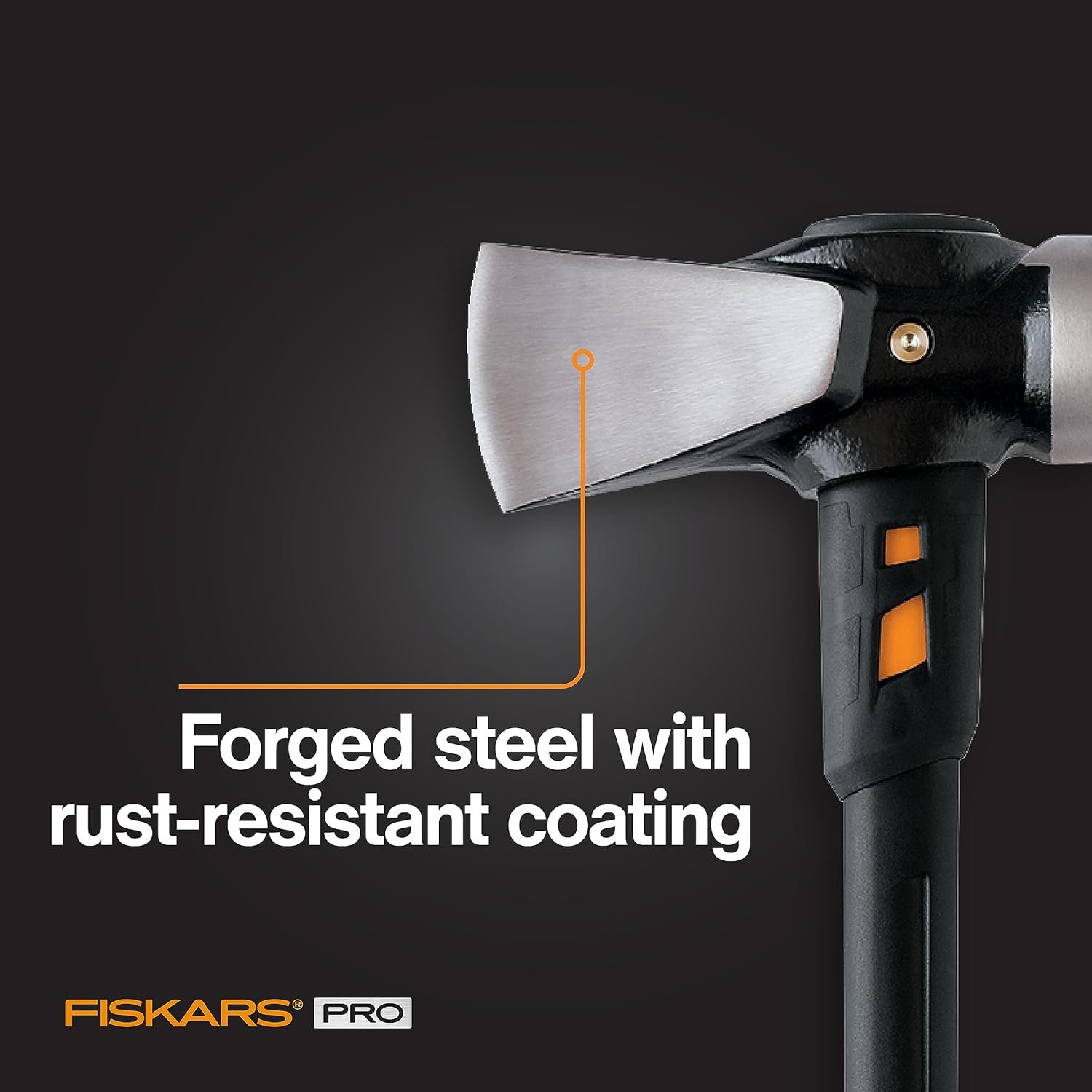
A high-quality maul uses a forged steel head, which offers strength, durability, and long-term reliability. Forged steel resists chipping, cracking, and deformation even under repeated high-impact use.
Advantages of Forged Steel
- Long-lasting edge integrity
- Better resistance to wear
- Consistent performance over time
This construction is essential for tools that endure heavy blows and repeated contact with hard wood.
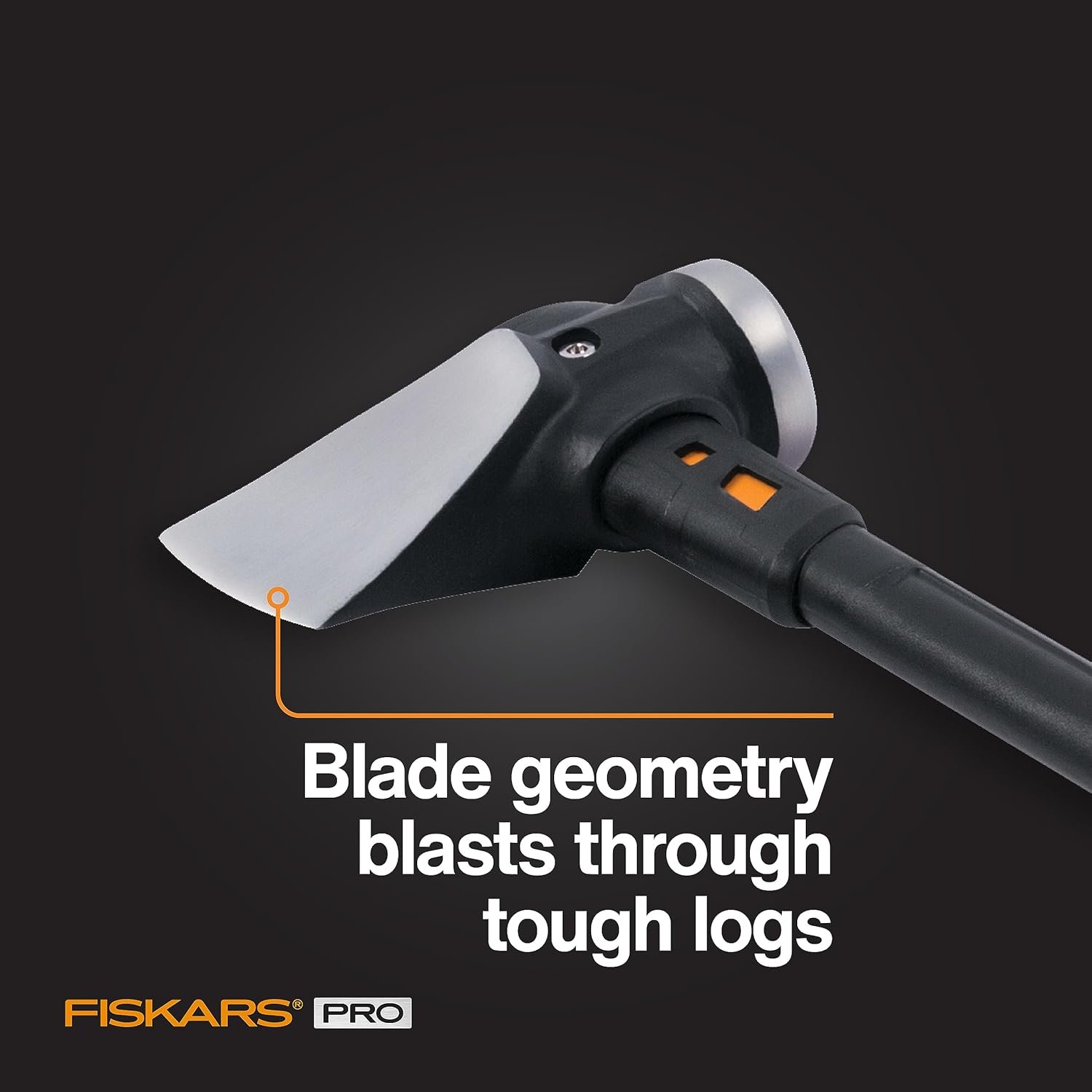
Wedge-Shaped Blade Geometry
The blade geometry of a splitting maul differs from a chopping axe. Instead of a sharp, thin edge, the maul features a thick wedge profile designed to force wood apart.
This geometry:
- Prevents the blade from getting stuck
- Improves splitting efficiency
- Handles knots and irregular grain better
The wedge shape is key to effective log splitting.
Long Handle for Maximum Leverage
A 36-inch handle provides excellent leverage, allowing users to generate greater force with each swing. The longer handle also increases swing arc, contributing to more powerful impacts.
Leverage Benefits
- Improved splitting power
- Better reach for larger logs
- Reduced strain when splitting thick rounds
A longer handle helps balance power and control during demanding tasks.
Shock-Absorbing Handle Technology
Modern splitting mauls often include shock-absorbing handles, designed to reduce vibration transmitted to the hands and arms. This feature is especially valuable during extended splitting sessions.
Reduced Vibration Means:
- Less hand and arm fatigue
- Better comfort during long use
- Improved control and accuracy
Shock absorption makes heavy tools more manageable over time.
Textured Grip for Secure Handling
A textured, non-slip grip enhances control when using a maul. This is particularly important when working outdoors, where moisture, sweat, or gloves can affect grip strength.
Grip Advantages
- Improved safety during swings
- Better control in wet or cold conditions
- Increased confidence when striking hard wood
Secure handling is critical for both efficiency and safety.
Inseparable Head Design for Safety
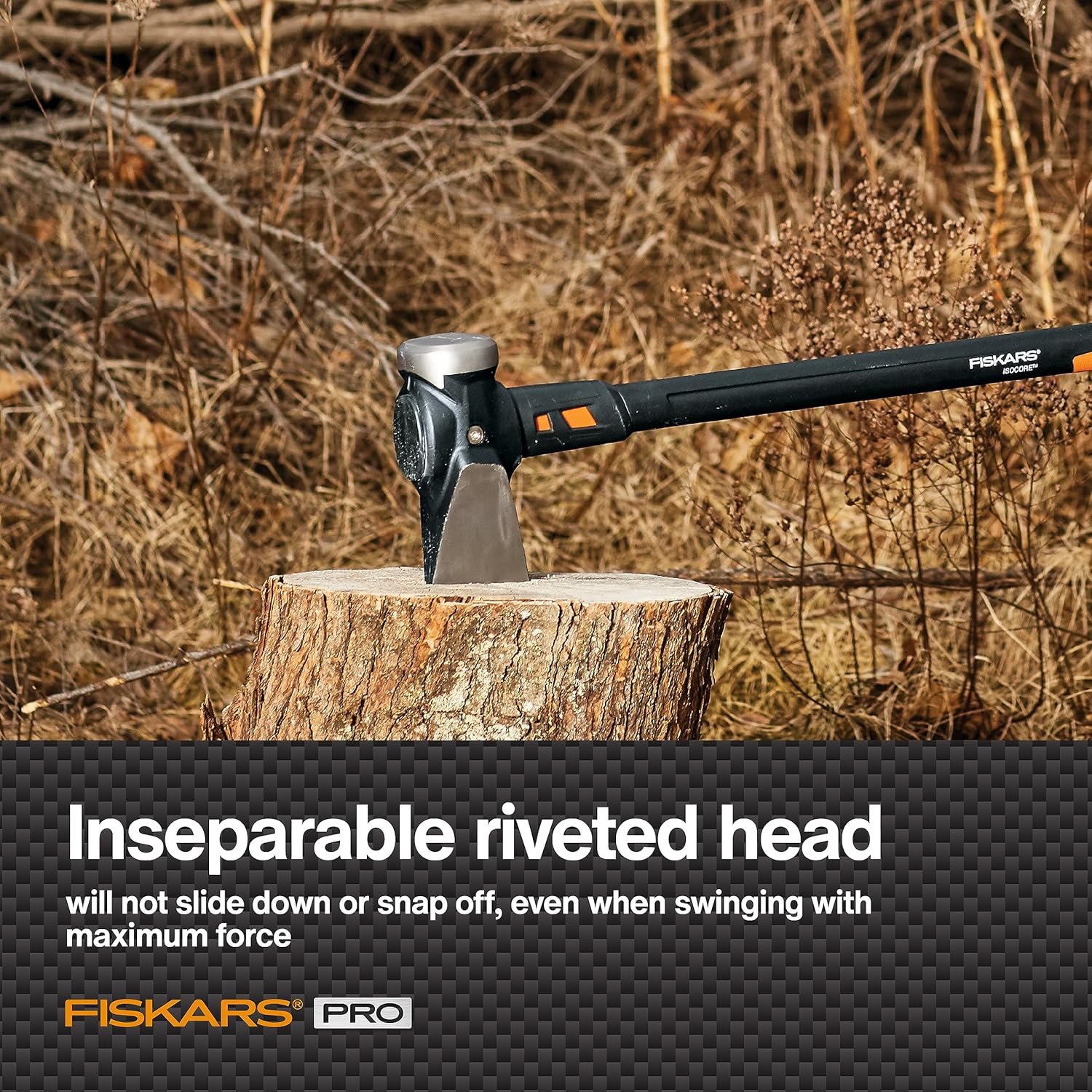
A splitting maul with an inseparable or riveted head adds an extra layer of safety. This construction prevents the head from loosening over time, even with repeated heavy impacts.
Safety Benefits
- Reduced risk of head detachment
- Increased tool reliability
- Peace of mind during high-force swings
This design is especially important for tools that experience extreme stress.
Technique Matters When Using a Splitting Maul
Using a maul effectively requires proper technique. While the tool provides power, correct form ensures efficiency and reduces fatigue.
Basic Technique Tips
- Let the weight of the maul do the work
- Aim for natural cracks in the wood
- Maintain a stable stance and controlled swing
- Avoid overextending or rushing strikes
Good technique maximizes performance and safety.
Ideal Log Types for a Splitting Maul
A splitting maul excels on logs that are:
- Thick and dense
- Made from hardwood species
- Knotted or irregular
- Difficult to split with lighter tools
For softer woods or small kindling, lighter axes may be more efficient, but for tough firewood, the maul is unmatched.
Physical Demands and User Strength
Because of its size and weight, a splitting maul requires a certain level of physical strength and endurance. It is best suited for users comfortable handling heavier tools.
However, the added weight can reduce the total number of swings needed, balancing effort over time. Users should take breaks and pace themselves during long splitting sessions.
Firewood Preparation Efficiency
A splitting maul significantly improves firewood preparation efficiency. With fewer strikes needed per log, users can process larger quantities of wood in less time.
Efficiency benefits include:
- Faster firewood production
- Reduced overall physical effort
- Cleaner, more uniform splits
This makes the tool valuable for seasonal wood preparation.
Outdoor and Rural Property Maintenance
Beyond firewood, a splitting maul is useful for general outdoor maintenance. It can break apart fallen logs, manage storm debris, and assist with land clearing tasks.
Its durability and power make it suitable for:
- Farms and rural properties
- Cabins and off-grid homes
- Outdoor recreation areas
This versatility adds to its long-term value.
Maintenance and Care
A splitting maul requires minimal maintenance, but proper care extends its lifespan.
Basic Maintenance Tips
- Clean dirt and sap from the blade after use
- Store in a dry area to prevent rust
- Inspect handle and head regularly
Simple upkeep keeps the tool performing reliably.
Storage Considerations
Due to its size, a splitting maul should be stored securely. Wall hooks, sheds, or dedicated tool racks help keep it accessible while preventing accidents.
Safe storage:
- Protects the blade and handle
- Reduces clutter
- Improves workshop organization
Proper storage also extends tool longevity.
Manual Tool Reliability
One advantage of a splitting maul is its independence from fuel or electricity. It works anytime, anywhere, without mechanical failure risks.
This reliability makes it:
- Ideal for remote locations
- Useful during power outages
- Dependable in all weather conditions
Manual tools remain essential in many outdoor settings.
Environmental and Practical Benefits
Using a maul produces no emissions and requires no fuel. It aligns well with sustainable practices and traditional firewood preparation methods.
Environmental benefits include:
- Zero fuel consumption
- No noise pollution
- Long-lasting durability
This makes it a responsible choice for eco-conscious users.
Who Should Use a Splitting Maul?
A splitting maul is best suited for:
- Homeowners who heat with wood
- Users splitting medium to large logs
- People maintaining rural or wooded properties
- Those who prefer durable, manual tools
It is especially effective for heavy-duty splitting tasks.
Everyday Performance and Long-Term Value
A well-built maul delivers consistent performance year after year. Its solid construction and simple design mean fewer failures and long-term dependability.
Over time, it becomes a trusted tool for seasonal and ongoing outdoor work.
Final Verdict: Is a Splitting Maul Worth It?
The splitting maul is a powerful, reliable, and time-tested tool for breaking tough firewood and managing heavy outdoor wood tasks. With its heavy forged steel head, long shock-absorbing handle, and secure grip, it delivers the force and control needed to split dense logs efficiently.
While its weight demands proper technique and physical readiness, the payoff is fewer strikes, cleaner splits, and dependable performance. For anyone who regularly prepares firewood or tackles demanding outdoor wood management, a splitting maul stands out as an essential and worthwhile investment.
Learn more about splitting maul in Fiskars
See more product reviews here